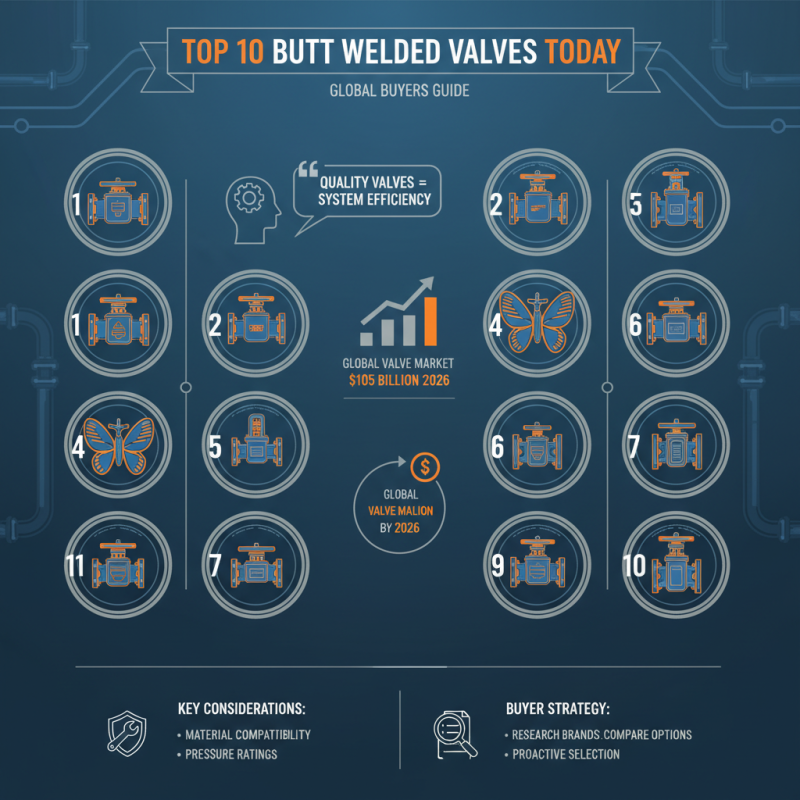
In today's industrial landscape, the demand for high-quality Butt Welded Valves continues to soar. According to a recent report by Market Research Future, the global valve market is projected to reach $105 billion by 2026. This growth is driven by rising investments in infrastructure and energy sectors. However, selecting the right valve can be challenging for buyers.
Dr. Emily Jacobs, a renowned expert in valve technology, emphasizes, "The efficiency and lifespan of a system can hinge on the quality of its valves." Butt Welded Valves, known for their robust design and excellent sealing capabilities, play a crucial role in diverse applications, from oil and gas to water treatment. Many manufacturers offer varying standards and specifications, which adds complexity to the selection process.
Buyers must consider factors like material compatibility and pressure ratings. While Butt Welded Valves typically provide superior durability, not all options are created equal. A proactive approach in researching and comparing leading brands can make a significant difference. Reflecting on this landscape reveals both opportunities and pitfalls that global buyers need to navigate carefully.
Overview of Butt Welded Valves and Their Applications
Butt welded valves are crucial in various industries. They provide a strong and leak-proof connection between pipes, making them ideal for high-pressure applications. Common materials include stainless steel and carbon steel, which enhance their durability. These valves are widely used in oil and gas, chemical processing, and water treatment.
The design of butt welded valves allows for seamless integration into piping systems. They are often employed in pipeline construction, where reliability is paramount. However, improper installation can lead to failures. Understanding the specific requirements of each application is essential. Factors like temperature, pressure, and fluid type must be considered.
Despite their advantages, butt welded valves are not without drawbacks. The installation process requires skilled labor, which may increase costs. Additionally, these valves can be more challenging to replace than threaded or flanged options. Regular inspection and maintenance are necessary to ensure long-lasting performance. A thorough understanding of these factors can help buyers make informed decisions.
Key Features to Consider When Choosing Butt Welded Valves
When selecting butt welded valves, several key features demand attention. First, consider the material composition. Valves can be made from various materials, including stainless steel and carbon steel. Each material offers unique advantages. Stainless steel provides excellent corrosion resistance, while carbon steel is known for its strength.
Weld quality is crucial in butt welded valves. Look for valves with smooth and consistent welds. A poor weld can lead to leaks and failures, impacting system performance. Pressure rating is another vital aspect. Ensure the valve can handle the system's operational pressures. Valves with low pressure ratings may not perform well under stress.
Size and compatibility must not be overlooked. Proper fitting within pipe systems is essential. Oversized or undersized valves can create inefficiencies. Additionally, evaluate design features such as flow characteristics and ease of operation. Simple designs often lead to lower maintenance costs. Reflecting on these factors can guide buyers toward making informed decisions.
Top 10 Butt Welded Valves for Global Buyers Today
| Valve Type |
Size Range |
Material |
Pressure Rating |
Temperature Range |
Key Features |
| Ball Valve |
1/2" - 12" |
Carbon Steel |
150 - 1500 PSI |
-20°C to 200°C |
Quick Operation, Low Torque |
| Gate Valve |
2" - 36" |
Stainless Steel |
300 - 600 PSI |
-50°C to 250°C |
Suitable for High Pressure |
| Globe Valve |
1" - 24" |
Cast Iron |
150 - 300 PSI |
-10°C to 180°C |
Good Throttling Capability |
| Check Valve |
2" - 30" |
Bronze |
150 - 750 PSI |
-20°C to 150°C |
Prevents Backflow |
| Butterfly Valve |
3" - 48" |
PVC |
150 - 200 PSI |
-10°C to 70°C |
Lightweight, Compact Design |
| Plug Valve |
3/4" - 6" |
Brass |
150 - 600 PSI |
-20°C to 350°C |
Full Flow, Easy Maintenance |
| Strainer Valve |
2" - 12" |
Stainless Steel |
150 - 300 PSI |
-15°C to 200°C |
Removes Debris from Fluid |
| Pressure Relief Valve |
1" - 8" |
Carbon Steel |
150 - 600 PSI |
-10°C to 250°C |
Safety Function, Adjustable Pressure |
| Automatic Control Valve |
2" - 12" |
PVC |
150 - 400 PSI |
-20°C to 100°C |
Remote Operation, High Responsiveness |
Top 10 Butt Welded Valves: Rankings and Specifications
Butt welded valves play a crucial role in various industries due to their robust construction and reliable performance. When selecting a valve, buyers must consider important specifications, such as material type, pressure ratings, and size. Common materials include stainless steel and carbon steel, known for their durability and resistance to corrosion. Many industries rely on these valves for critical applications, yet choosing the right type can be challenging.
A key factor in performance is the valve design. A well-designed butt welded valve reduces the risk of leaks and increases safety. However, not all designs are created equal. Some may have potential weaknesses in extreme conditions, leading to operational inefficiencies. Understanding these factors is essential for making informed decisions.
Another aspect to ponder is maintenance. Regular inspections of butt welded valves can prevent unexpected failures. Yet, some users may neglect this step, which might result in costly repairs or downtime. Awareness of best practices in maintenance is vital to ensure the longevity and efficiency of these valves. Ultimately, knowledge of specifications and practical considerations can empower buyers to choose wisely.
Comparison of Popular Brands in the Butt Welded Valve Market
The butt welded valve market is competitive and diverse. Buyers must understand key factors impacting their choices. Quality and durability are crucial. Valves must withstand extreme pressure and temperatures. Proper installation ensures longevity and reliability. Each valve type has unique features tailored for specific applications.
Brand reputation plays a significant role in decision-making. Trustworthy manufacturers provide consistent performance. Their products pass industry standards and safety regulations. However, some brands may not perform as advertised. Consumers must research user feedback. This process helps identify potential issues before purchase. Peer reviews and expert insights can prevent costly mistakes.
Pricing is another critical aspect. High price does not always guarantee quality. Conversely, cheaper options might lack essential features. Buyers should focus on the long-term value of the product. Investing in a reliable valve often saves money down the line. Ultimately, informed decisions lead to better outcomes in the butt welded valve market.
Buyer’s Guide: Selecting the Right Butt Welded Valve for Your Needs
When selecting the right butt welded valve, consider your specific applications. These valves play a crucial role in ensuring leak-free connections in piping systems. Look for materials that withstand your operational environment. Common choices include stainless steel and carbon steel. Each material has distinct properties affecting performance and longevity.
Size and pressure ratings are vital factors. Determine the pipe size and the maximum pressure your system will experience. Mismatched specifications can lead to failures. Additionally, think about the installation process. Some valves may require more effort to fit and secure. It's essential to assess available space and accessibility.
Researching manufacturer reputation is critical. A reliable producer typically offers robust warranties and support services. Reading customer reviews can provide insights into real-world performance. However, be cautious of overly positive feedback. Always question claims that seem too good to be true. Your choice impacts not just performance, but also overall system safety.
Top 10 Butt Welded Valves for Global Buyers
Conclusion
This article provides a comprehensive overview of Butt Welded Valves, essential components in various piping systems, known for their durability and seamless connections. It highlights their wide-ranging applications across industries, ensuring optimal flow control and leak prevention. Key features to consider when selecting Butt Welded Valves include material compatibility, pressure ratings, and size specifications, all crucial for achieving optimal performance in specific settings.
In the main section, the article ranks the top 10 Butt Welded Valves based on their specifications, facilitating informed choices for buyers. A comparison of popular brands within the market also offers insights into performance and reliability. The buyer’s guide emphasizes critical considerations to ensure that the selected Butt Welded Valve meets individual needs effectively, ultimately assisting businesses in making the best investment decisions for their operations.

 Shoulong Valve