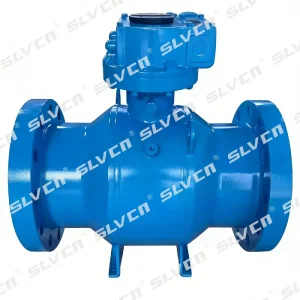
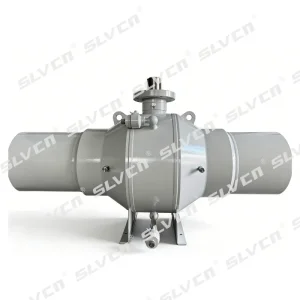
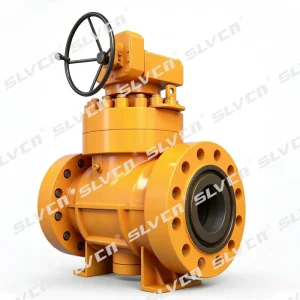
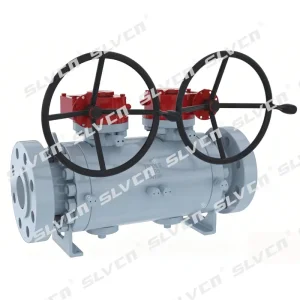
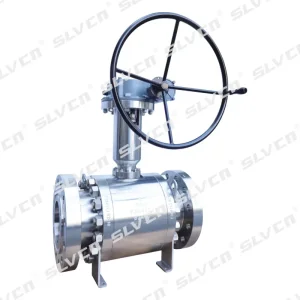
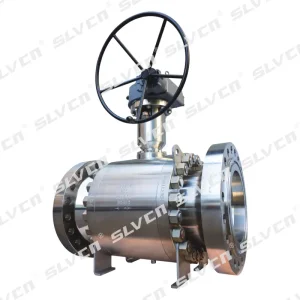
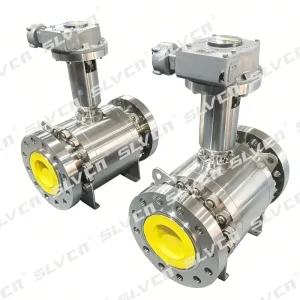
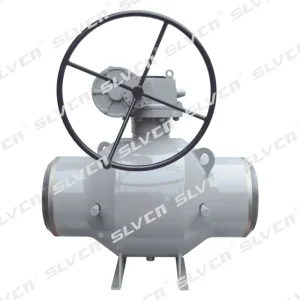
As the global energy transition accelerates, demand for cryogenic ball valve manufacturers has shifted from simple commodity sourcing to high-stakes engineering partnerships. Procurement teams in the energy sector now prioritize supply chain resilience over mere unit price. Modern procurement strategies require vendors who can guarantee performance at temperatures as low as -196°C, ensuring that critical infrastructure—such as LNG terminals and hydrogen transport networks—operates without risk of leakage or mechanical failure.
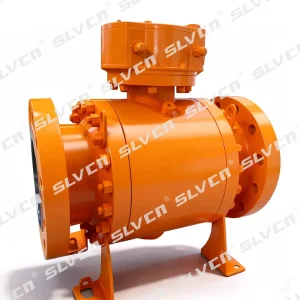
The Chinese manufacturing sector has undergone a profound "Industry 4.0" transformation. Leading manufacturers are now utilizing automated CNC machining, AI-driven quality inspection, and IoT-enabled testing rigs to ensure consistency. This digital leap means that international buyers no longer face the information asymmetry of the past. Our production facilities leverage digital twin technology to simulate valve stress before manufacturing, drastically reducing lead times and ensuring that every valve, from floating ball designs to trunnion-mounted units, meets ISO 5211 and API 6D standards with precision.
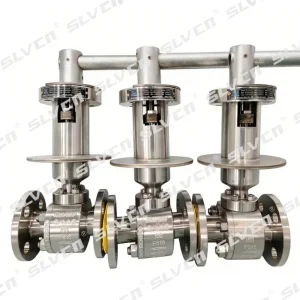
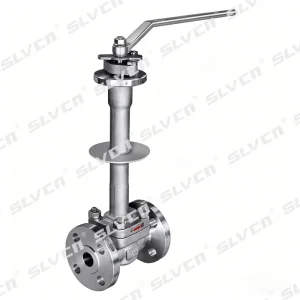
One size does not fit all. Our expertise as a manufacturer lies in adapting designs for specific regional challenges. Whether it is a Double Block and Bleed (DBB) configuration for a pipeline in the Middle East or an extended stem floating ball valve for a cold-chain storage facility in Northern Europe, we optimize material selection—utilizing specialized alloys like F316L and low-temperature carbon steel—to prevent brittle fracture and ensure operational longevity.
Understanding the "Why" behind the valve is crucial for procurement engineers. Our Cryogenic Ball Valve line is designed specifically to mitigate the thermal contraction issues common at cryogenic temperatures. By integrating:
We provide not just products, but verified compliance documentation, heat treatment records, and 100% NDT (Non-Destructive Testing) reports as standard procedure.
A: A cryogenic valve requires specific metallurgy (often 316/316L or specific low-temp alloys) and an extended bonnet design to keep the stem packing area away from the cryogenic zone, preventing the stem seal from freezing and failing.
A: DBB provides two sealing surfaces and a cavity bleed feature, allowing the user to verify sealing integrity while the line is pressurized. This is non-negotiable for safety in critical transmission lines.
A: We utilize ERP-integrated production tracking, robotic welding for shell integrity, and automated pressure testing rigs calibrated to global standards, ensuring every batch is traceable.
 Shoulong Valve