 Shoulong Valve
1 / 1
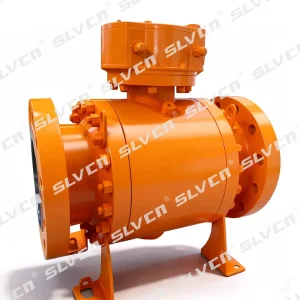
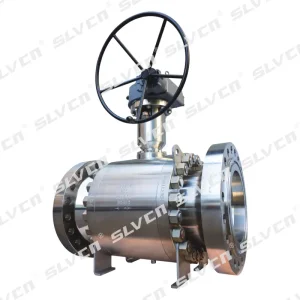
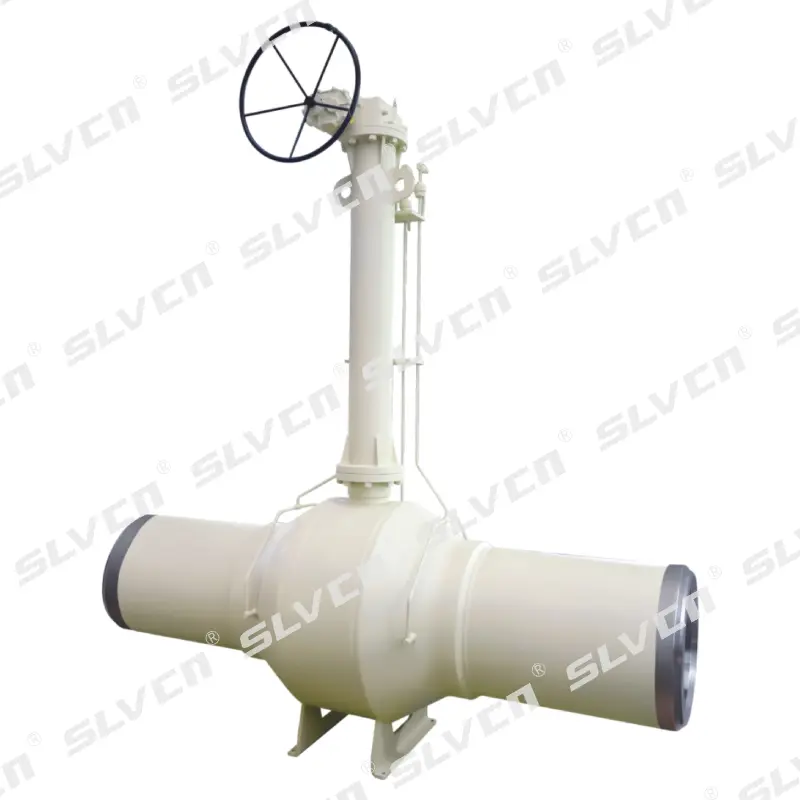
No bolted or flanged joints — withstands soil and pipeline stress for long-term, maintenance-free operation.
Low torque operation with extended seat life, ideal for large-diameter, high-pressure pipelines.
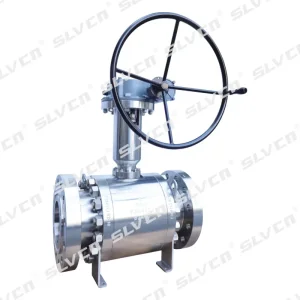
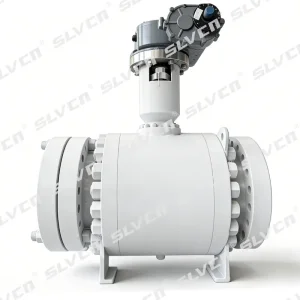
Stem reaches ground level, minimizing excavation and ensuring safe operation of underground valves.
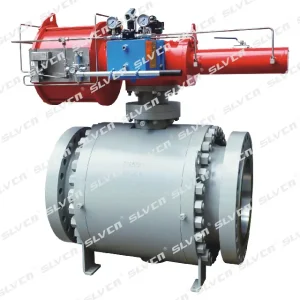
Smooth and efficient torque transmission for easy opening and closing. Optional electric or pneumatic actuators available.
Extended pipe ends ensure pipeline alignment, reduce welding stress, and simplify lifting, transport, and field installation.
Choose PTFE, RPTFE, PPL, PEEK, TFM, PCTFE, or other materials to match media, temperature, and pressure requirements.
A fully welded body eliminates all bolted or flanged joints, which are common points of leakage and mechanical weakness. This makes the valve highly resistant to soil movement and pipeline stress, ensuring long-term, maintenance-free underground operation.
Trunnion-mounted balls are mechanically anchored at both the top and bottom, which reduces operating torque and distributes pressure loads evenly, extending seat life in high-pressure systems.
The extended stem brings the valve's operating interface to ground level, allowing operation without excavation. This reduces maintenance costs and improves safety in deep-buried environments.
Yes. While standard configurations include a manual gear, the valve can be fitted with optional electric or pneumatic actuators for automated or remote-controlled pipeline systems.
They ensure accurate alignment, reduce welding stress near the valve body, and provide convenient lifting points, simplifying logistics and ensuring reliable field installation.
Seat selection depends on media type, temperature, and pressure. Materials like PTFE/RPTFE are standard for gas, while PEEK or PCTFE are used for high-temperature or aggressive media.