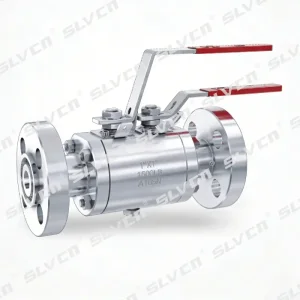
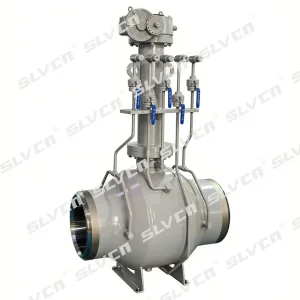
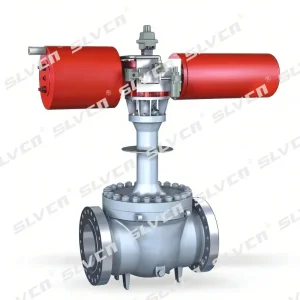
In the rapidly evolving landscape of global energy and infrastructure, the role of an OEM forged steel ball valve manufacturer has shifted from a simple supplier to a strategic technical partner. As industries move toward decarbonization and higher safety thresholds, the engineering requirements for flow control equipment have become increasingly rigorous.
The valve industry is currently witnessing a paradigm shift driven by the "Industry 4.0" revolution. Leading factories are no longer just producing hardware; they are integrating sensor technology and material traceability into the core manufacturing process. Key trends include:
For global procurement managers, the "Made in China" label has been redefined by the rise of China Factory 4.0. This evolution emphasizes resilience, speed, and uncompromising quality standards.
By leveraging automated CNC machining centers, robotic welding stations, and AI-driven quality inspection systems, top-tier Chinese valve factories have minimized human error. The focus is now on the "Golden Triangle" of manufacturing: Quality Stability, Supply Chain Agility, and Cost Efficiency. A resilient supply chain is no longer just about the lowest price; it is about mitigating risk through vertical integration—where a single manufacturer controls the entire process, from raw forged steel sourcing to final pressure testing.
Purchasing agents for major oil, gas, and chemical projects face a complex decision matrix. When vetting an OEM forged steel ball valve manufacturer, the focus should move beyond the initial quotation:
Forged steel ball valves are the "heart" of critical infrastructure. Understanding their application environment helps in selecting the right specification:
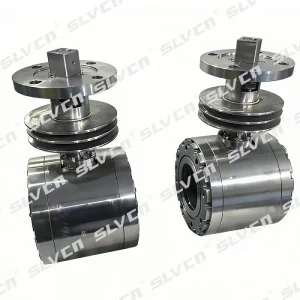
Essential for LNG facilities. Requires extended bonnets and specialized cryogenic testing to ensure sealing integrity at -196°C.
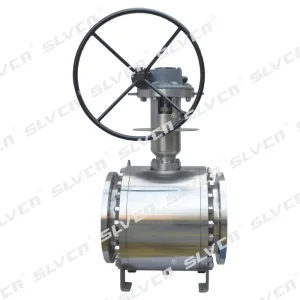
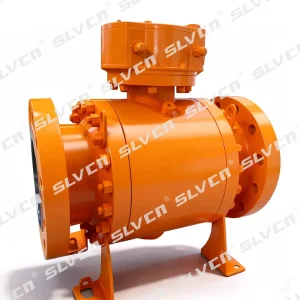
Fully welded, trunnion-mounted designs are crucial for buried pipeline projects, eliminating external leak paths.
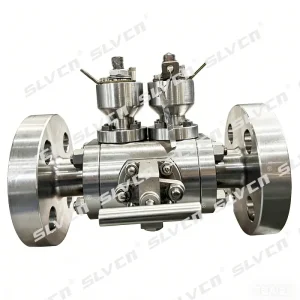
DBB (Double Block and Bleed) designs provide the critical isolation safety required during pipeline maintenance.
Q1: Why choose forged steel over cast steel for ball valves?
A: Forging creates a denser, more uniform grain structure, offering higher strength and superior resistance to internal pressure, which is vital for high-safety industrial applications.
Q2: What is the benefit of a DBB (Double Block and Bleed) valve?
A: DBB valves allow for the isolation of the upstream and downstream sections of a pipeline while simultaneously bleeding the cavity between the two seats. This ensures zero leakage, protecting maintenance personnel.
Q3: How does your factory ensure international quality standards?
A: We strictly adhere to API 6D, ASME B16.34, and ISO 9001 standards. Every valve undergoes hydrostatic and pneumatic testing, alongside Non-Destructive Testing (NDT) to verify structural integrity.
 Shoulong Valve