High-Integrity Isolation Valves for Demanding Environments
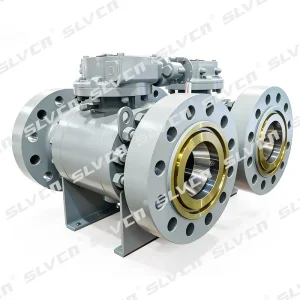
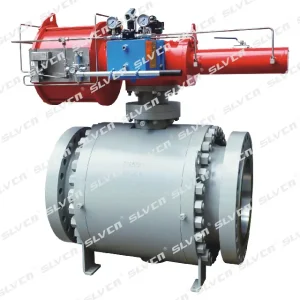
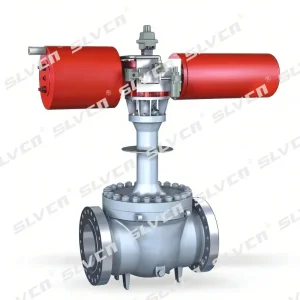
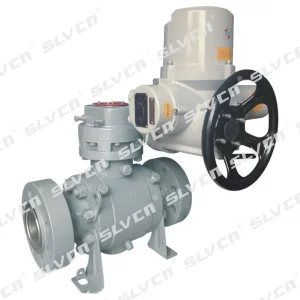
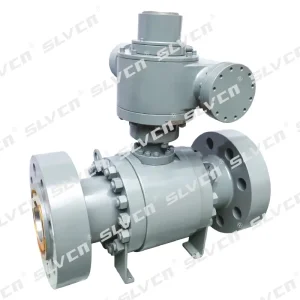
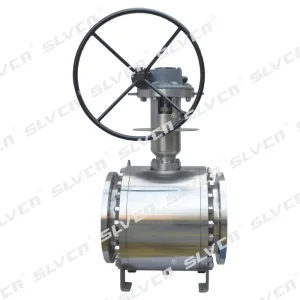
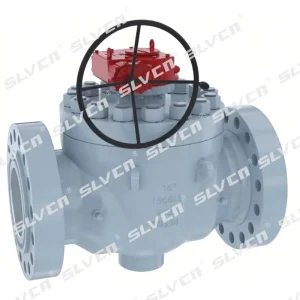
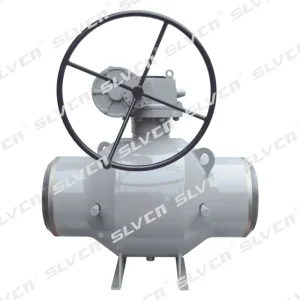
In the contemporary landscape of high-pressure fluid management, the Double Block and Bleed (DBB) valve has transitioned from a specialized component to a safety-critical standard. As a leading OEM DBB Double Block and Bleed Manufacturer, we recognize that the integration of two seating surfaces and a bleed mechanism into a single valve body represents more than just mechanical efficiency—it is a paradigm shift in operational security and risk mitigation.
Traditional isolation required multiple valves and complex piping. Our DBB designs consolidate this into a single unit, reducing:
Standard Gate Valve: Single point of failure.
Standard Ball Valve: Limited isolation integrity.
SLVCN DBB Valve: Dual-barrier protection with real-time seal verification.
The global market for DBB valves is currently buoyed by the "Energy Transition" and stricter environmental regulations. According to recent industrial forecasts, the shift toward Hydrogen Economy and LNG infrastructure has necessitated valves that can handle ultra-low temperatures and high-diffusivity gases.
When searching for a "Supplier," most procurement managers focus on price and lead time. However, the true Information Gain—the value beyond the obvious—lies in understanding the Double Isolation and Bleed (DIB) vs. DBB distinction. While a DBB valve provides seal from both directions with a bleed in the middle, a DIB valve (DIB-1 or DIB-2) provides an additional layer of security by allowing the second seat to seal even if the first seat fails. As a premier manufacturer, we provide the engineering depth to help clients choose the exact configuration for their specific safety integrity level (SIL) requirements.
Our manufacturing cluster in China leverages an integrated supply chain—from raw forging to precision CNC machining and automated testing. This allows us to offer 30% faster lead times than European counterparts without compromising on API 6D or ISO 5211 standards.
International enterprises in the Middle East and North Sea are moving toward "Value-Based Procurement." They demand valves that meet the Fugitive Emission ISO 15848-1 standard to meet carbon neutrality goals.
The future is "Smart Valves." We are currently developing DBB units integrated with IoT sensors that monitor pressure differentials in the bleed cavity, alerting operators to potential seat wear before a failure occurs.
Engineered for Reliability Across Critical Applications.
Valves ensure pipeline isolation and safe operation across upstream, midstream, and downstream systems, even under high-pressure conditions.
Valves maintain reliable sealing and stable operation in corrosive media and fluctuating temperatures.
Valves deliver proven low-temperature performance, tight sealing, and safe pressure management for cryogenic systems.
Valves control steam and process flows in high-pressure, high-temperature environments for critical units.
Valves provide reliable isolation and flow control in continuous, high-pressure industrial operations.
With over 30 years of expertise in forging high-performance ball valves, SLVCN provides reliable, project-ready solutions for critical industrial applications. Our valves are rigorously engineered, tested, and certified to meet the strictest international standards, ensuring zero-leakage and dependable performance in harsh operating environments.
Trusted by projects across Europe, the Middle East, and worldwide, we deliver the precision and reliability that demanding industrial systems require.
Quality and testing procedures applied in accordance with international standards.
Our valves are engineered specifically for high-risk, high-pressure, and cryogenic applications where failure is not an option.
Over 30 years supporting industrial projects worldwide, we understand real operating conditions and international approval processes.
Every valve is manufactured under controlled procedures aligned with international standards (API, ASME, ISO).
The application of DBB valves varies significantly across different geographies, influenced by local climate and infrastructure age:
Expertise is demonstrated through our selection of materials. For high-pressure service, we utilize ASTM A105N for carbon steel applications and ASTM A182 F316/F316L for corrosive environments. For severe service involving abrasive media, we provide Tungsten Carbide (TC) or Stellite hard-facing on the ball and seats, achieving a hardness of over 60 HRC. This level of technical specification ensures our role as a Reliable OEM DBB Supplier.
Furthermore, our "Information Gain" approach extends to API 607 Fire-Safe Certification. In the event of a fire, the primary soft seal may decompose, but our secondary metal-to-metal contact ensures the valve continues to provide a barrier, preventing catastrophic fuel release.
Expert Insights into DBB Valve Selection and Maintenance
High-Quality Solutions for Oil, Gas, and Power
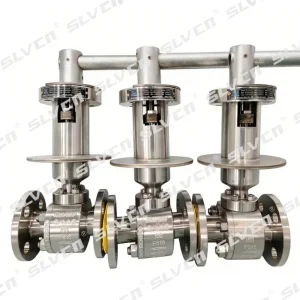
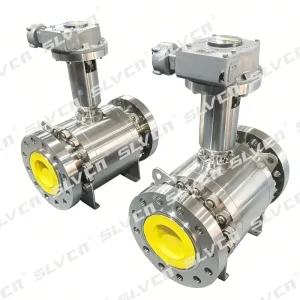
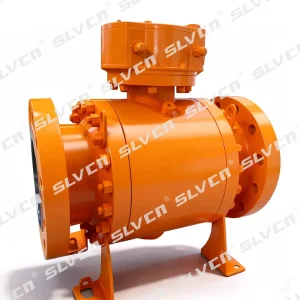
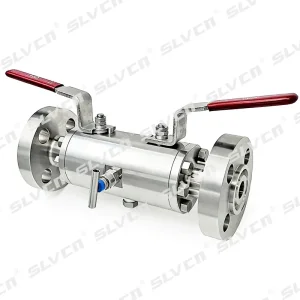
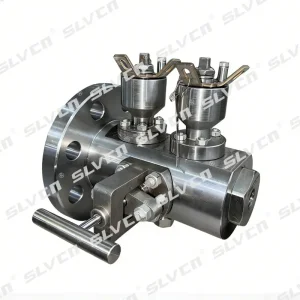
As a leading OEM DBB Double Block And Bleed Manufacturers & Supplier, we are committed to providing information gain and technical transparency to our global partners. Contact our engineering team for a project-specific consultation.
 Shoulong Valve