 Shoulong Valve
1 / 1
Trunnion-mounted ball absorbs axial loads under high pressure, reducing torque and ensuring long-term sealing stability.
Spring-loaded seats maintain reliable sealing during low-pressure start-up and pressure fluctuations.
Single or double piston effect seat designs available to meet different pressure relief and safety requirements.
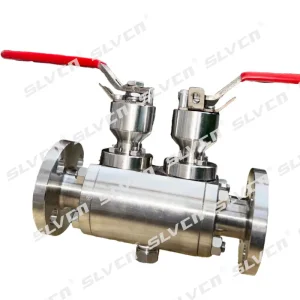
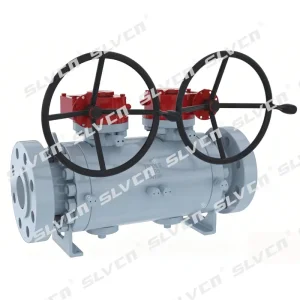
Double Block and Bleed configuration enables cavity pressure relief and sealing integrity verification.
Designed to maintain sealing performance during fire exposure for emergency isolation in hydrocarbon service.
Seat and stem sealant injection available upon request for temporary sealing under abnormal conditions.
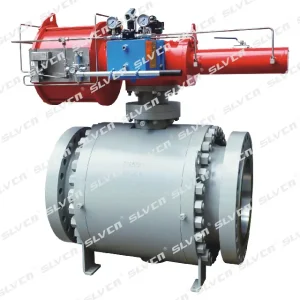
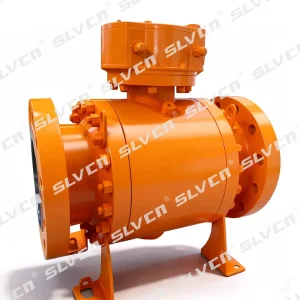
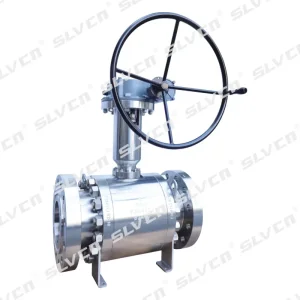
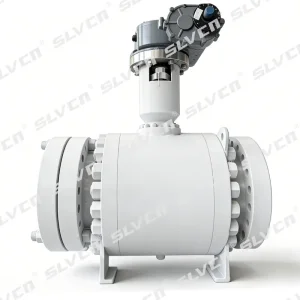
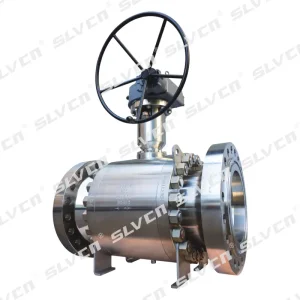
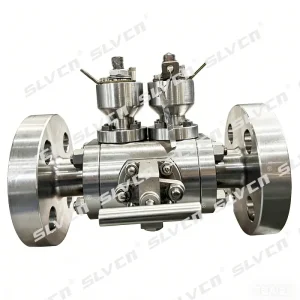
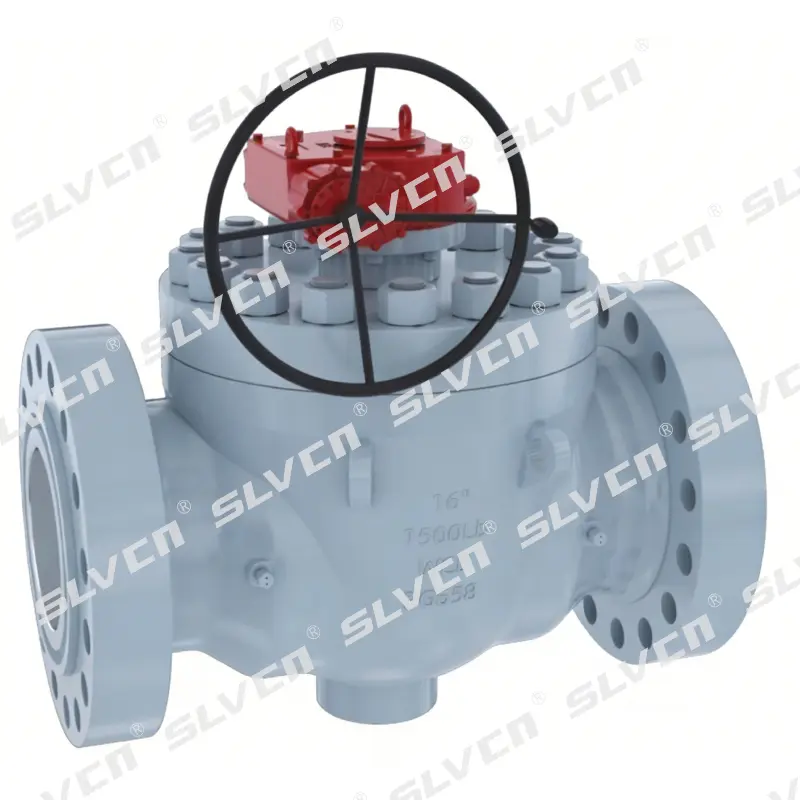
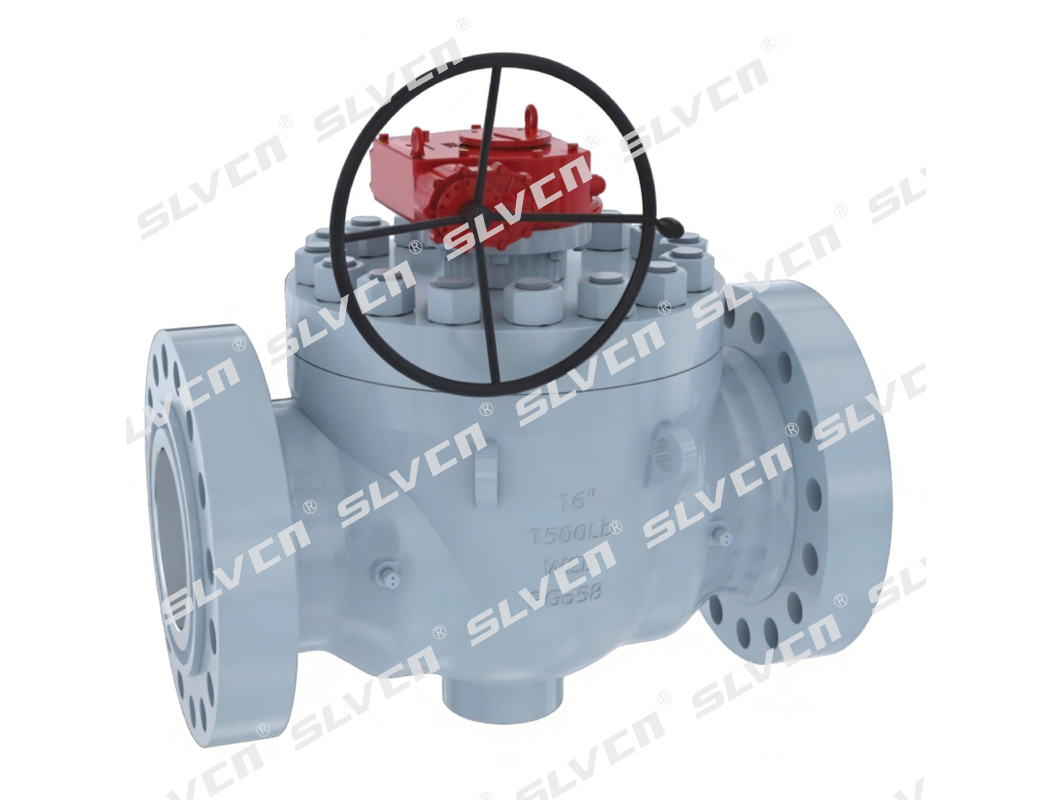
Class 1500 Top Entry Trunnion Mounted Ball Valve is designed for critical isolation in high-pressure and demanding service conditions, commonly found in oil & gas, chemical processing, power generation, and other severe industrial applications.
The valve features a trunnion-supported ball combined with a Double Block and Bleed (DBB) sealing system, ensuring positive isolation and controlled cavity pressure management under high differential pressure.
Its top entry construction allows in-line inspection and maintenance without pipeline removal, significantly reducing downtime in continuous operation systems. A one-piece cast body provides high structural integrity while maintaining cost efficiency for large-size and high-pressure installations.
Safety-oriented design elements, including fire-safe construction, anti-static device, and anti-blowout stem, support reliable operation in hazardous services. For sour gas environments, materials and sealing systems can be supplied in compliance with NACE MR0175 requirements.
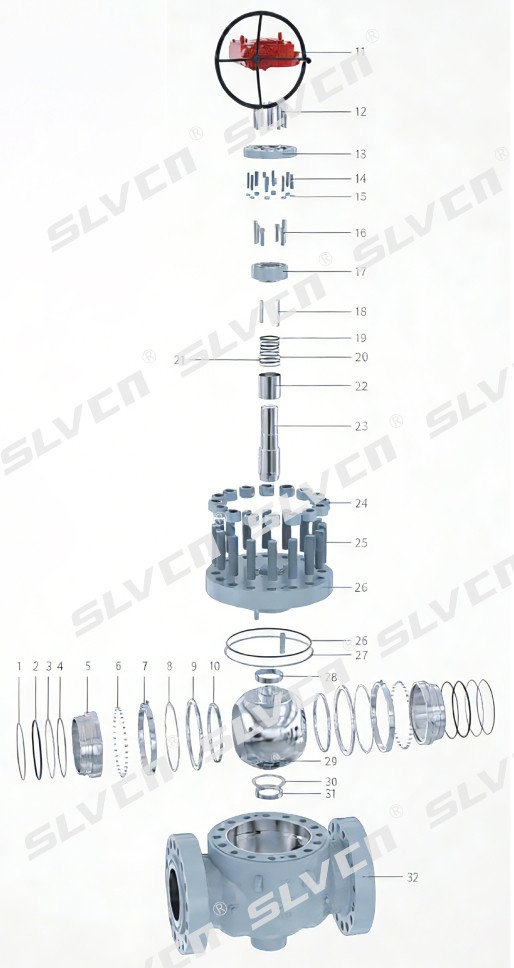
| No. | Part Name | No. | Part Name | No. | Part Name | No. | Part Name |
| 1 | "O"-Ring | 9 | Seat adjustment ring | 17 | Packing Box | 25 | Nut |
| 2 | "O"-Ring | 10 | Seat | 18 | Key | 26 | Valve Lid |
| 3 | Thrust Washer | 11 | Worm-Gear | 19 | Packing | 27 | "O"-Ring |
| 4 | Packing | 12 | Bolt | 20 | Gasket | 28 | Gasket |
| 5 | Seat Retainer | 13 | Connection Plate | 21 | "O"-Ring | 29 | Ball |
| 6 | Spring | 14 | Stud | 22 | Stem Bearing | 30 | Thrust Washer |
| 7 | Spring Seat | 15 | Nut | 23 | Stem | 31 | Stem Bearing |
| 8 | Thrust Washer | 16 | Bolt | 24 | Stud | 32 | Body |
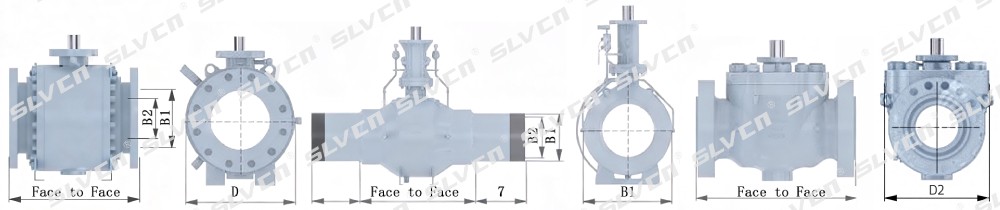
Dimensions: Class 1500 - Full Port
| Size NPS/DN | Bore (in/mm) | Face to Face (in/mm) | D2 (in/mm) | Weight (lb/kg) | |||
| B1 | B2 | RF | RTJ | BWE | |||
| 2" / 50 | 1.94 / 49 | 1.94 / 49 | 14.5 / 368 | 14.63 / 371 | 14.5 / 368 | 8.5 / 216 | 121 / 55 |
| 3" / 80 | 2.94 / 74 | 2.94 / 74 | 18.5 / 470 | 18.63 / 473 | 18.5 / 470 | 10.5 / 267 | 331 / 150 |
| 4" / 100 | 3.94 / 100 | 3.94 / 100 | 21.5 / 546 | 21.63 / 549 | 21.5 / 546 | 12.2 / 311 | 606 / 275 |
| 6" / 150 | 5.69 / 144 | 5.69 / 144 | 27.75 / 705 | 28 / 711 | 27.75 / 705 | 15.6 / 396 | 1389 / 630 |
| 8" / 200 | 7.56 / 192 | 7.56 / 192 | 32.75 / 832 | 33.13 / 841 | 32.75 / 832 | 19.1 / 486 | 2557 / 1160 |
Dimensions: Class 1500 - Reduced Port
| Size NPS/DN | Bore (in/mm) | Face to Face (in/mm) | D2 (in/mm) | Weight (lb/kg) | |||
| B1 | B2 | RF | RTJ | BWE | |||
| 2"X1.5" / 50X40 | 1.94 / 49 | 1.5 / 38 | 14.5 / 368 | 14.63 / 371 | 14.5 / 368 | 8.5 / 216 | 110 / 50 |
| 3"X2" / 80X50 | 2.94 / 74 | 1.94 / 49 | 18.5 / 470 | 18.63 / 473 | 18.5 / 470 | 10.5 / 267 | 212 / 96 |
| 4"X3" / 100X80 | 3.94 / 100 | 2.94 / 74 | 21.5 / 546 | 21.63 / 549 | 21.5 / 546 | 12.2 / 311 | 441 / 200 |
| 6"X4" / 150X100 | 5.69 / 144 | 3.94 / 100 | 27.75 / 705 | 28 / 711 | 27.75 / 705 | 15.6 / 396 | 827 / 375 |
| 8"X6" / 200X150 | 7.56 / 192 | 5.69 / 144 | 32.75 / 832 | 33.13 / 841 | 32.75 / 832 | 19.1 / 486 | 1565 / 710 |

The primary advantage is in-line maintainability. The valve internals can be inspected or replaced without removing the valve body from the pipeline, significantly reducing downtime.
Class 1500 refers to the pressure-temperature rating of the valve according to ASME B16.34. It indicates the maximum allowable working pressure for specific materials at varying temperatures.
DBB allows the valve to seal the pressure from both upstream and downstream ends simultaneously. The bleed port in the cavity allows for pressure relief or testing of the seal integrity.
Yes, materials can be customized to comply with NACE MR0175/ISO 15156 standards to ensure resistance to sulfide stress cracking in sour service applications.
SPE (Single Piston Effect) seats allow self-relieving of cavity pressure to the pipeline. DPE (Double Piston Effect) seats provide a redundant seal even if one seat fails, often used for critical safety barriers.
Yes, custom engineering for larger valve sizes up to 56" and specialized pressure classes is available upon technical request.