Strictly compliant with API 6D, ASME B16.34, and ISO 17292 standards.
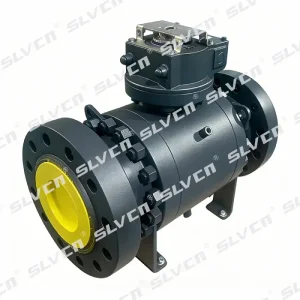
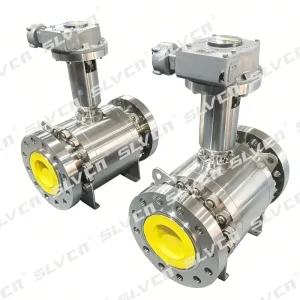
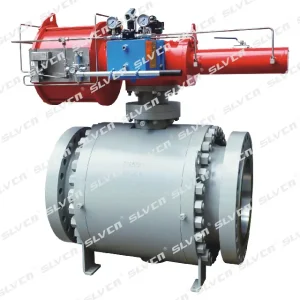
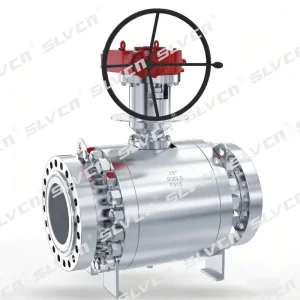
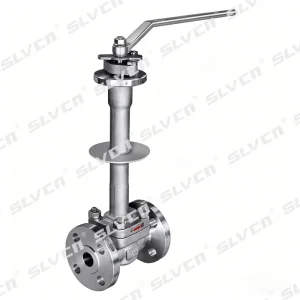
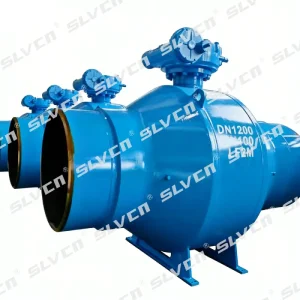
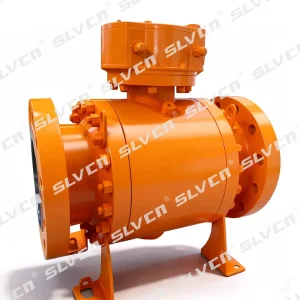
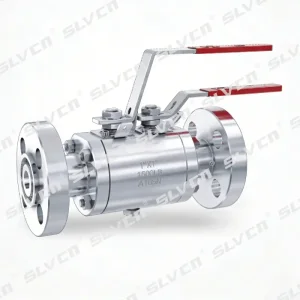
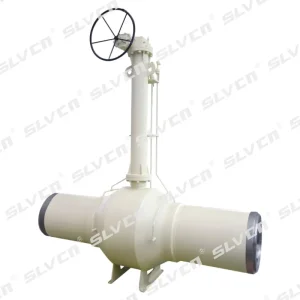
In the complex ecosystem of global industrial flow control, the Trunnion Mounted Ball Valve (TMBV) stands as a cornerstone of safety and efficiency. Unlike floating ball valves, the TMBV design utilizes a fixed ball supported by a trunnion (lower stem) and an upper stem, ensuring that the pressure from the pipeline is absorbed by the valve body rather than the seats. This fundamental mechanical advantage is what allows these valves to perform in high-pressure (up to Class 2500) and large-diameter (up to 60") applications.
However, the performance of a TMBV is only as good as its engineering drawing. A professional drawing is more than just a blueprint; it is a synthesis of material science, fluid dynamics, and mechanical engineering. High-quality drawings provide the essential "information gain" that allows EPC (Engineering, Procurement, and Construction) contractors to integrate these components into massive projects without risk of failure.
Today, the industrial landscape is shifting toward extreme environments. Deepwater exploration, shale gas extraction, and cross-continental pipelines demand valves that can survive corrosive "sour gas" (H2S) and ultra-low temperatures. China has emerged as a global hub for high-quality TMBV manufacturing, combining cost-efficiency with a rigorous adherence to API 6D and CE/PED standards. Suppliers in this region are now competing with European and American counterparts by offering faster lead times on custom engineering drawings and bespoke valve designs.
Trunnion support ensures low operating torque even at maximum differential pressure, reducing the size and cost of actuators.
Independent spring-loaded seats provide simultaneous upstream and downstream sealing, allowing for safe cavity venting.
Compliance with API 607 and API 6FA ensures secondary metal-to-metal sealing if soft seals are destroyed by fire.
The trunnion-mounted ball valve industry is undergoing a digital revolution. The "drawing" of tomorrow includes embedded sensor ports for real-time leak detection and acoustic monitoring. As we move toward Industry 4.0, the synergy between hardware (the valve) and software (the monitoring system) is becoming a primary differentiator for top-tier suppliers.
Development of Nickel-based alloys and specialized Tungsten Carbide coatings for severe service and hydrogen-ready infrastructure.
Using 3D printing for complex internal geometries in valve trims to reduce noise and prevent cavitation in high-velocity gas lines.
Every physical valve will be paired with a Digital Twin based on its original engineering drawing, allowing AI to predict seat wear and schedule maintenance before failures occur.
High-quality TMBV drawings are tailored to specific geographical challenges:

With over 30 years of expertise in forging high-performance ball valves, SLVCN provides reliable, project-ready solutions for critical industrial applications. Our valves are rigorously engineered, tested, and certified to meet the strictest international standards, ensuring zero-leakage and dependable performance in harsh operating environments. Trusted by projects across Europe, the Middle East, and worldwide, we deliver the precision and reliability that demanding industrial systems require.
Holistic approaches for complex engineering challenges.
High-pressure isolation for wellheads and manifolds, requiring API 6A and 6D trunnion designs with metal-seated reliability.
From liquefaction to regasification, our cryogenic TMBV drawings ensure the integrity of the stem seal at -196°C.
Eliminating fugitive emissions through ultra-tight sealing and specialized elastomers that prevent hydrogen embrittlement.
A: In a floating design, the ball is pushed by the fluid pressure against the downstream seat. At large sizes or high pressures, this load becomes immense, leading to high torque and seat deformation. The trunnion design supports the ball mechanically, keeping the load off the seats and ensuring smooth operation.
A: A professional drawing must include: Detailed bill of materials (BOM), pressure-temperature ratings, face-to-face dimensions (ASME B16.10), wall thickness (ASME B16.34), NDE (Non-Destructive Examination) requirements, and cross-sectional details of the DBB mechanism.
A: DBB allows the operator to verify that the seats are sealing correctly while the valve is in the closed position by opening a bleed valve on the body cavity. This provides a safe environment for downstream maintenance without depressurizing the entire system.
A: Yes, we utilize specialized metallurgical drawings that specify low-carbon steels and high-grade stainless steels, along with high-integrity stem seals, to address the unique diffusion properties of hydrogen gas.
Factory-direct sourcing with full engineering support.
 Shoulong Valve