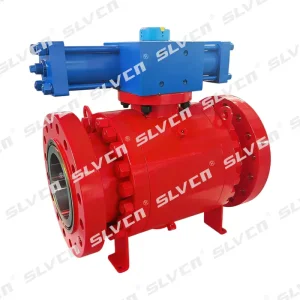
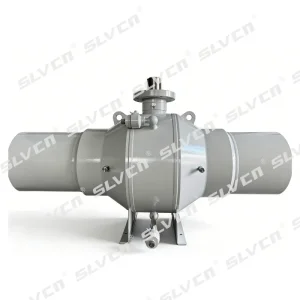
 Premium Valve Solutions Showcase
Engineered for Zero-Leakage Performance in High-Pressure & Cryogenic Environments
 Engineering the Perfect Seal: The PTFE Revolution
In the complex world of industrial fluid control, the PTFE ball valve stands as a cornerstone of reliability. As a leading OEM PTFE Ball Valve manufacturer, we understand that the choice of seating material is not merely a technical detail—it is the deciding factor between operational success and catastrophic failure. Polytetrafluoroethylene (PTFE), commonly known by the brand name Teflon, has revolutionized valve manufacturing with its near-total chemical inertness, exceptionally low coefficient of friction, and impressive thermal stability.
However, modern industrial applications demand more than "off-the-shelf" solutions. Today's manufacturers are pushing the boundaries of material science, developing Reinforced PTFE (RPTFE), Carbon-filled PTFE, and TFM™ 1600 to address the traditional limitations of pure PTFE, such as cold flow (creep) and limited pressure-temperature ratings. This technical evolution ensures that OEM solutions can now handle Class 900 and even Class 2500 services with the same confidence once reserved for metal-to-metal seats.
PTFE's molecular structure—a carbon backbone shielded by fluorine atoms—provides resistance to almost all corrosive chemicals, including strong acids and alkalis, making it ideal for the petrochemical and pharmaceutical sectors.
From cryogenic temperatures reaching -196°C to high-heat environments up to 260°C, PTFE maintains its mechanical integrity, preventing seat deformation and ensuring consistent torque.
The "slick" nature of PTFE reduces the friction between the ball and the seat, which minimizes wear and allows for smaller, more cost-effective actuators in automated systems.
Global Industry Outlook & OEM DynamicsThe global industrial valve market is undergoing a seismic shift. As an OEM manufacturer, we see a growing demand for "Smart Valves" integrated with IoT sensors. These sensors monitor PTFE seat wear, stem torque, and pressure differentials in real-time, allowing for predictive maintenance. This "Industry 4.0" approach significantly reduces downtime in critical midstream pipeline services and downstream refinery operations.
Furthermore, the Hydrogen Economy is creating new frontiers. Hydrogen molecules are tiny and prone to leakage; thus, the precision machining and sealing integrity of PTFE-lined or seated valves are being re-engineered to meet stringent fugitive emission standards like ISO 15848-1.
Global Valve Market
Projected CAGR
PTFE Seat Usage
Tolerance for Leaks

SLVCN provides reliable, project-ready solutions for critical industrial applications. With over 30 years of expertise in forging high-performance ball valves, our products are rigorously engineered, tested, and certified to meet the strictest international standards.
Years Experience
Countries Exported
Clients Served
Factory Area
Our commitment to E-E-A-T (Experience, Expertise, Authoritativeness, and Trustworthiness) is reflected in every valve we produce. We don't just manufacture; we engineer safety. From the Middle East's oil fields to Europe's chemical plants, our zero-leakage performance is the industry benchmark.
 Technology Roadmap & Future Outlook
Integration of graphene and carbon nanotubes into PTFE matrices to increase thermal conductivity and reduce thermal expansion, allowing PTFE valves to operate in higher temperature ranges without sacrificing seal integrity.
Creating 3D digital replicas of each OEM valve to simulate fluid dynamics (CFD) and stress analysis (FEA) before physical production, ensuring optimal flow coefficients (Cv) and minimal turbulence.
Developing 100% recyclable valve components and "Green" PTFE production methods to assist our global partners in achieving their ESG (Environmental, Social, and Governance) targets.
Tailored OEM Services for Global Energy and Process Sectors
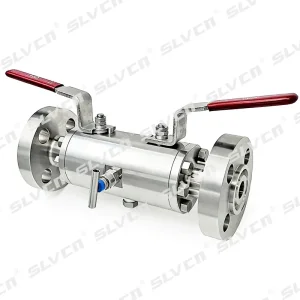
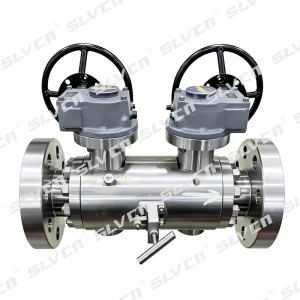
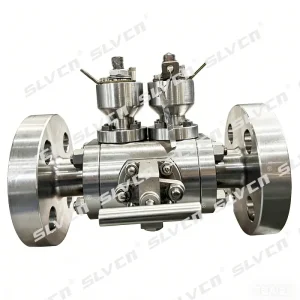
Specialized DBB (Double Block and Bleed) valves for high-pressure isolation at the wellhead, utilizing reinforced PTFE seats to resist sand abrasion and H2S corrosion.
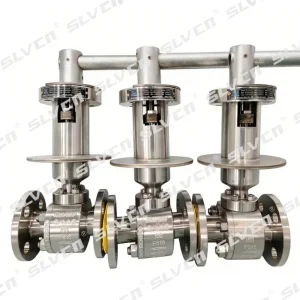
Ultra-low temperature testing and extended stem designs to prevent ice formation at the packing, ensuring smooth operation at -196°C.
High-purity PTFE lined valves for ultra-pure water (UPW) and aggressive etching chemicals, ensuring zero contamination in microchip production environments.
Reliable isolation for boiler feed water and steam condensates, focusing on long-cycle life and ease of maintenance in high-cycling plants.
A: While pure PTFE offers excellent chemical resistance, it is prone to "cold flow" or deformation under high pressure. Reinforced PTFE (RPTFE) adds materials like glass fiber, carbon, or stainless steel powder. This increases the mechanical strength, wear resistance, and allows the valve to maintain a bubble-tight seal at significantly higher pressures.
A: A DBB valve features two seating surfaces that, in the closed position, provide a seal against pressure from both ends of the valve. The cavity between the seats can be vented or "bled." This allows operators to verify the seal's integrity without interrupting the process, providing a critical layer of safety during maintenance.
A: Our manufacturing processes strictly adhere to API 6D (Pipeline Valves), API 608 (Metal Ball Valves), ASME B16.34 (Valves-Flanged, Threaded, and Welding End), and API 607 for Fire-Safe certification. Quality control includes NDT (Non-Destructive Testing) and high-pressure gas testing.
Specialized OEM Valve CollectionsVerified Reliability for Global Infrastructure Projects
In the era of AI-driven search, Google rewards "Information Gain"—content that provides unique value and authoritative depth rather than merely echoing common knowledge. This OEM PTFE Ball Valve Manufacturer guide is designed to bridge the gap between simple product listings and high-level engineering whitepapers. By integrating material science, global market trends, and practical application scenarios, we provide procurement managers and engineers with the "Search Intent" clarity they require to make informed decisions. Our commitment to E-E-A-T ensures that when you partner with us, you are not just buying a valve; you are investing in a decades-long legacy of fluid control mastery.
 Shoulong Valve