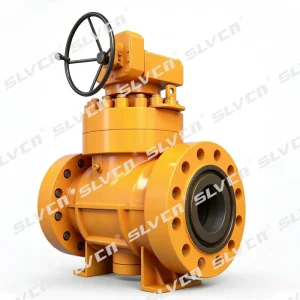
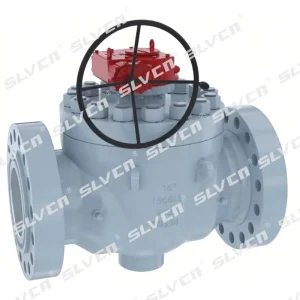
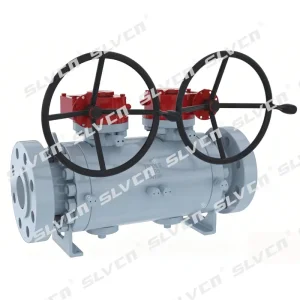
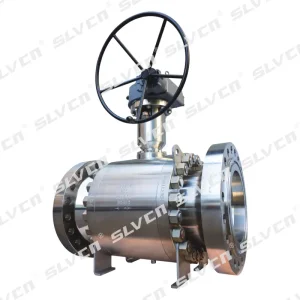
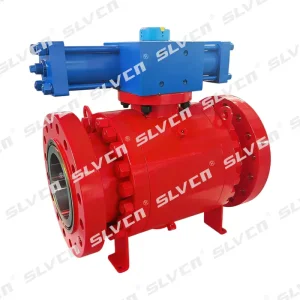
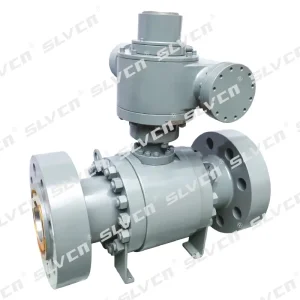
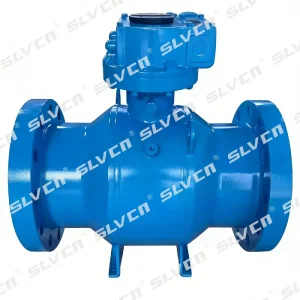
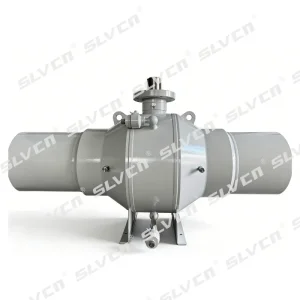
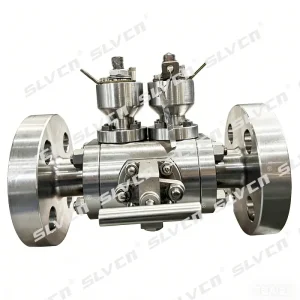
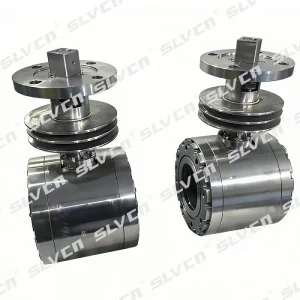
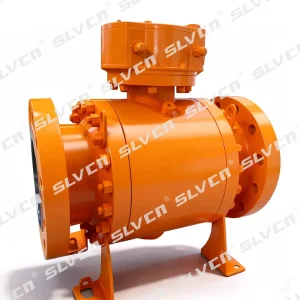
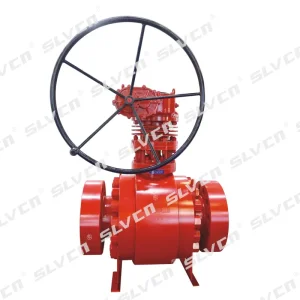
In the modern industrial landscape, the Three Piece Ball Valve has emerged as the definitive standard for versatility and maintenance efficiency. Unlike unified body designs, the three-piece configuration allows the center section—containing the ball, stem, and seats—to be easily swung out or removed from the pipeline. This white paper explores how top-tier OEM manufacturers are redefining flow control through advanced material science and digital integration.
The transition from manual isolation to high-precision automated systems has transformed the ball valve from a simple commodity into a critical engineered asset. Current trends focus on:
For global procurement managers, the shift is moving toward Total Cost of Ownership (TCO). Leading factories now provide comprehensive "Project-Ready" packages that include:
Standardized PMI (Positive Material Identification), Radiographic Testing (RT), and Dye Penetration (DP) for every casting.
Evidence of sustainable manufacturing processes and ethical supply chain management, increasingly required by EU and North American stakeholders.
Strategic warehousing and localized certification (CE/PED, EAC, API) to reduce project lead times from months to weeks.
The next decade of valve manufacturing belongs to "Digital Twin" technology. By creating a virtual counterpart of a Three Piece Ball Valve, engineers can simulate fluid dynamics (CFD) under surge conditions before the first metal is cast. This ensures that the valve body can withstand localized turbulence and cavitation, significantly extending service life in severe service applications.
Our valves are engineered specifically for high-risk, high-pressure, high-temperature, and cryogenic applications - where failure is not an option.
Over 30 years supporting industrial projects worldwide, we understand real operating conditions, international approval processes, and on-site challenges.
Every valve is manufactured under controlled procedures aligned with international standards, ensuring minimal leakage and operational risk.
Ensuring pipeline isolation and safe operation across upstream, midstream, and downstream systems.
Reliable sealing in corrosive media and fluctuating temperatures.
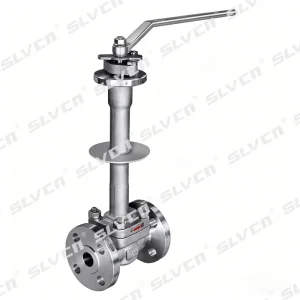
Ultra-low temperature performance down to -196℃ with extended stems.
High-integrity sealing to prevent leakage of high-pressure hydrogen molecules.
Years Experience
Countries Served
Global Clients
Sqm Factory
All OEM products manufactured at our factory adhere to API 6D, API 608, and ASME B16.34. Fire-safe testing is conducted per API 607 and API 6FA to ensure safety in the event of industrial fires.
We provide localized technical support and commission assistance for mega-projects in Europe, Southeast Asia, and the Middle East, ensuring seamless integration into existing SCADA systems.
Our R&D roadmap focuses on "Zero-Leakage" technology for Hydrogen service and the development of 3D-printed valve internals to optimize flow coefficient (Cv) values.
The 3-piece design allows for "in-line" maintenance. The center section can be serviced or replaced without removing the end connections from the pipe, significantly reducing downtime in continuous processes.
Every valve undergoes hydrostatic and air testing according to API 598. For high-pressure units (Class 900-2500), we conduct high-pressure gas testing and ultrasonic inspection of the forged body to detect internal flaws.
Yes. Our valves feature ISO 5211 mounting pads for direct mounting of pneumatic, electric, or hydraulic actuators, complete with limit switches and positioners for DCS integration.
Standard forged units are available in 4-6 weeks. Highly customized valves with exotic alloys (Monel, Inconel) or specific automation packages typically require 10-14 weeks depending on material availability.
 Shoulong Valve