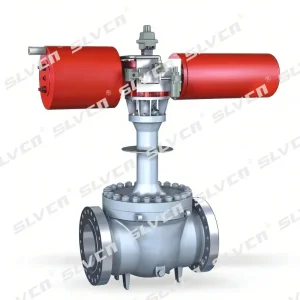
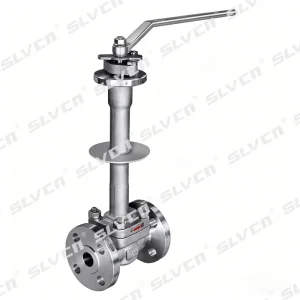
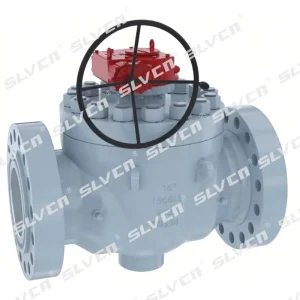
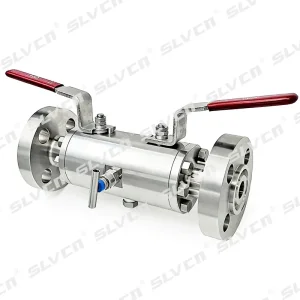
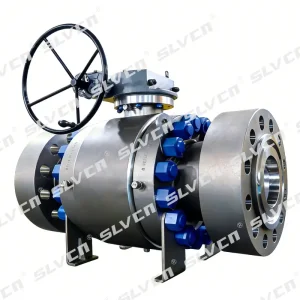
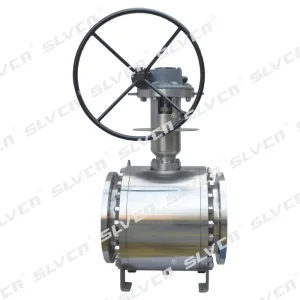
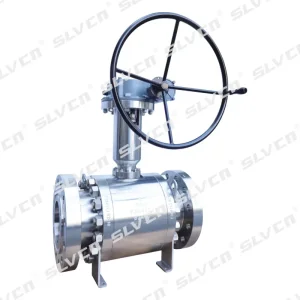
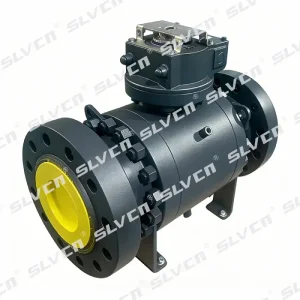
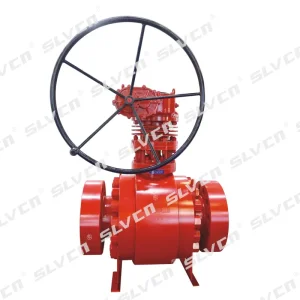
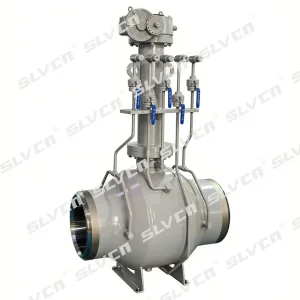
In the precision-driven landscape of the German "Mittelstand" and heavy industrial sectors, the demand for uncompromising valve reliability has never been higher. As a leading Top Entry Ball Valve Manufacturer, we understand that for the German market—spanning the chemical clusters of Ludwigshafen to the energy hubs in Berlin—"Standard" is simply not enough. Our engineering philosophy aligns with E-E-A-T principles, ensuring that every valve delivered to the European market represents a synthesis of three decades of experience and cutting-edge material science.
The Top Entry design is the gold standard for critical service. Unlike side-entry valves, the top-entry configuration allows for in-line maintenance. In a country like Germany, where labor costs are high and operational downtime in a BASF or Bayer plant can cost millions of Euros per hour, the ability to service a valve without removing it from the pipeline provides a massive Information Gain and ROI advantage.
Germany's "Energiewende" (Energy Transition) requires a robust infrastructure for hydrogen, LNG, and carbon capture. Our valves are engineered to meet TA-Luft (German Clean Air Act) requirements, ensuring zero fugitive emissions in the dense industrial corridors of North Rhine-Westphalia.
Globally, the shift toward unmanned offshore platforms and deep-sea pipelines necessitates valves with 30-year design lives. We integrate IoT-ready sensors for predictive maintenance, aligning with Germany's Industry 4.0 standards.
Full compliance with PED 2014/68/EU and AD 2000 standards. Our manufacturing processes are audited to meet the rigorous quality expectations of German EPC (Engineering, Procurement, and Construction) firms.
As we look toward 2030, the "Top Entry" architecture is evolving. We are no longer just a manufacturer; we are a technology partner. Our roadmap includes:
Our Top Entry Ball Valves are currently deployed in several critical German scenarios:
1. Natural Gas Storage (Speicher): Providing reliable isolation for underground storage facilities in Lower Saxony, where high pressure and reliability are paramount.
2. Chemical Refineries: Integrated into the harsh processing lines of the "ChemDelta Bavaria," where corrosive media requires duplex or super-duplex stainless steel bodies.
3. District Heating (Fernwärme): Large-diameter valves supporting the modernization of municipal heating grids in Berlin and Munich.
Years of Engineering Expertise
PED & CE Compliance
Fugitive Emission Leakage
Technical Support for Europe
The primary advantage is maintenance. In German industrial settings, minimizing downtime is critical. Top Entry valves allow all internal parts to be removed and serviced from the top flange without removing the valve body from the line, saving significant time and labor costs.
Yes. Our stem sealing systems are designed and tested to meet the stringent "Technishe Anleitung zur Reinhaltung der Luft" (TA-Luft) requirements, which is a mandatory standard for many chemical and petrochemical applications in Germany to prevent fugitive emissions.
For the German H2 transition, we recommend high-grade 316/316L stainless steel or specialized carbon steels with controlled hardness levels to prevent hydrogen-induced cracking. We provide full material traceability as per EN 10204 3.1 or 3.2.
We work closely with German engineering teams, providing comprehensive documentation, BIM models, and technical consultancy during the FEED (Front-End Engineering Design) phase to ensure the valve specifications align perfectly with project goals.
Our commitment as a Top Entry Ball Valve Manufacturer goes beyond the physical product. We provide a comprehensive service ecosystem designed to meet the high expectations of the Germany market. From initial design consultation and FEA (Finite Element Analysis) to final FAT (Factory Acceptance Testing) witnessed by third-party agencies like TUV or Lloyd's Register, we ensure that our global status as a premium supplier is reflected in every valve we ship.
By focusing on Information Gain—providing deeper technical data, more transparent supply chain metrics, and superior material science—we empower German engineers to build safer, more efficient, and more sustainable industrial systems for the 21st century.
 Shoulong Valve