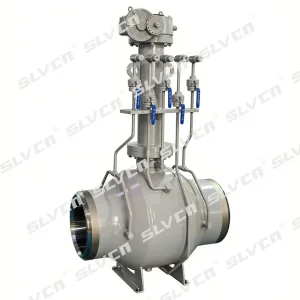
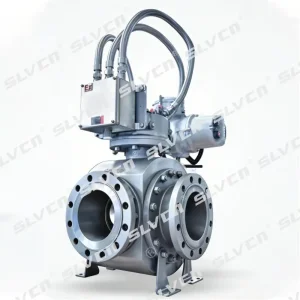
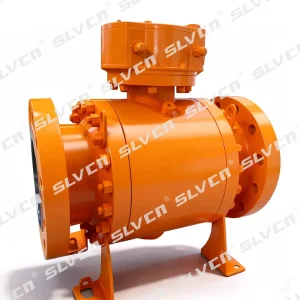
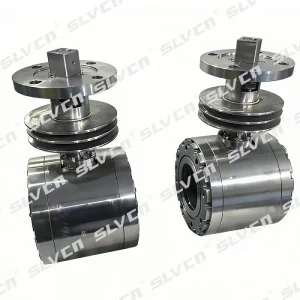
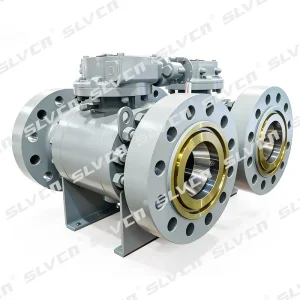
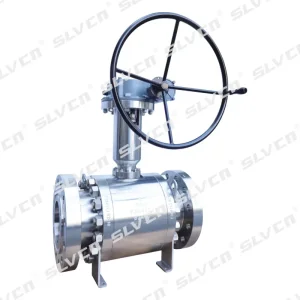
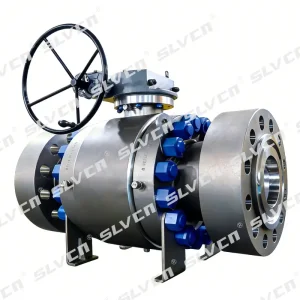
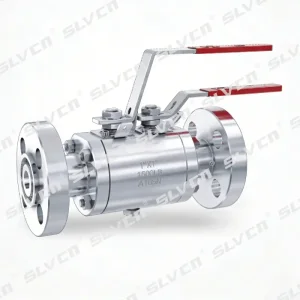
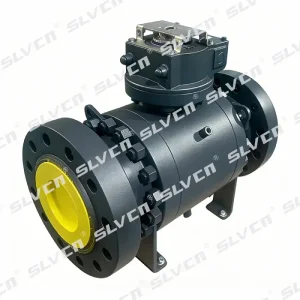
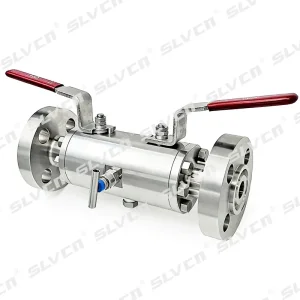
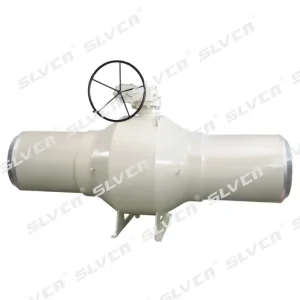
In the high-stakes world of oil, gas, and petrochemical processing, the integrity of a valve is not merely a matter of operational efficiency—it is a critical safety parameter. A "Fire Safe" ball valve is designed to maintain sealing integrity under extreme thermal stress, preventing the spread of hazardous, flammable media during a facility fire. As global industries move toward more stringent safety mandates (such as API 607 and API 6FA), the demand for high-quality, factory-certified fire-safe ball valves has surged.
A true fire-safe valve must pass rigorous burn testing where the valve is exposed to temperatures between 760°C and 980°C (1400°F - 1800°F) for 30 minutes while under internal pressure. The valve must maintain a "pass" condition for both external leakage (through the stem and body seals) and internal leakage (across the seat). Leading manufacturers, like our facility, utilize advanced secondary metal-to-metal seals that activate only when the primary soft seat is compromised by heat, ensuring constant isolation.
Procurement professionals in the EPC (Engineering, Procurement, and Construction) sector are shifting their strategies. The "lowest cost" approach is being replaced by "Total Cost of Ownership" (TCO) analysis. Supply chain resilience has become the cornerstone of international valve procurement.
The valve industry is undergoing a digital and material transformation. Future-proofing your infrastructure requires understanding the following trends:
Integration of smart actuators and valve positioners that report "health scores" to DCS/SCADA systems.
High Velocity Oxy-Fuel (HVOF) coatings for metal-seated valves to combat severe abrasion and erosion.
Redesigning sealing geometry to prevent hydrogen embrittlement and leakage in new energy infrastructure.
A: A standard ball valve typically uses soft seats (PTFE/PEEK) which melt under extreme heat. A fire-safe valve incorporates a secondary metal seat. If the soft seat burns away, the ball shifts to the metal seat, maintaining a seal to prevent catastrophic leaks during a fire.
A: We employ a multi-stage inspection process: raw material chemical analysis, non-destructive testing (NDT) for welds, hydrostatic and pneumatic shell testing, and final torque verification, all documented with complete traceability reports.
 Shoulong Valve