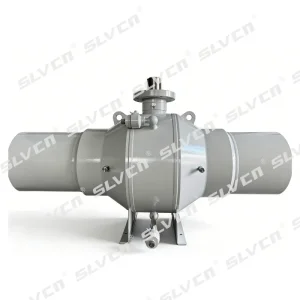
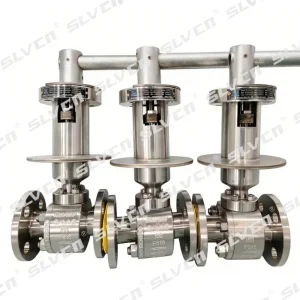
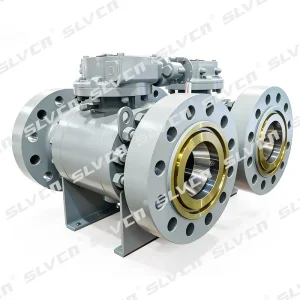
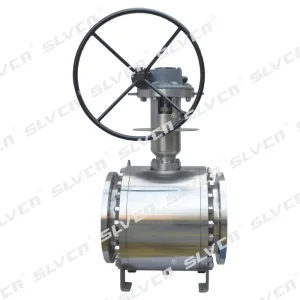
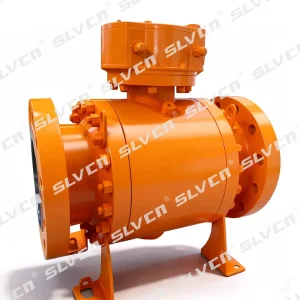
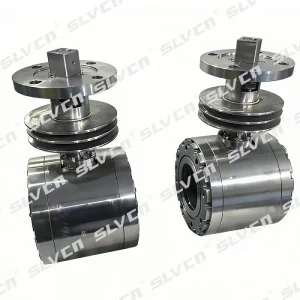
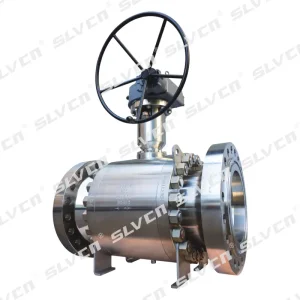
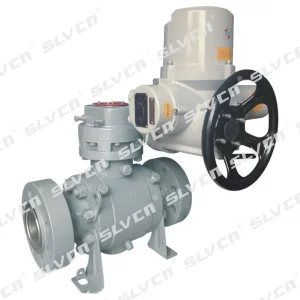
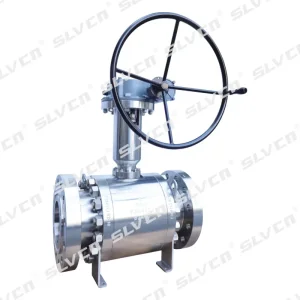
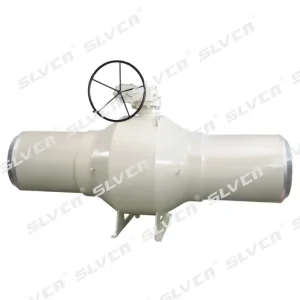
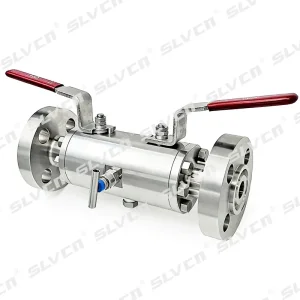
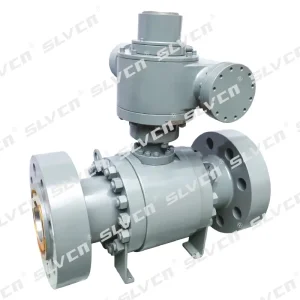
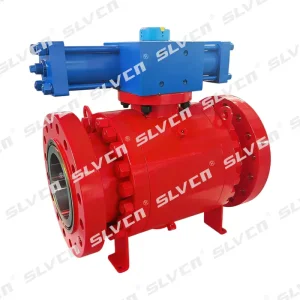
In the realm of high-pressure industrial fluid control, the Trunnion Mounted Ball Valve (TMBV) stands as the pinnacle of reliability. Unlike floating ball valves, trunnion-mounted designs utilize an additional mechanical anchor—the trunnion—to support the ball, ensuring that even under extreme pressures, the ball remains stationary while the seats float against it. This design significantly reduces operating torque and minimizes wear, making it the preferred choice for critical infrastructure in Oil & Gas, Petrochemical, and LNG sectors.
When searching for "High-Quality Trunnion Mounted Valve Manufacturer," users are seeking more than just a product; they are looking for compliance with API 6D, ISO 14313, and ASME B16.34 standards. Our factory leverages advanced FEA (Finite Element Analysis) to ensure structural integrity.
Key features include Double Block and Bleed (DBB) capabilities, anti-blowout stem designs, and fire-safe certification. These features are non-negotiable in hazardous environment applications.
As global energy demand shifts, the requirement for reliable pipeline infrastructure grows. Our export-grade valves currently support mega-projects across the Middle East, Southeast Asia, and Europe, providing the back-bone for secure energy distribution.
The modern trunnion valve is no longer just a mechanical component. We are integrating IoT-ready actuators that monitor pressure, temperature, and leakage in real-time. This predictive maintenance approach reduces unplanned downtime, aligning with Industry 4.0 standards.
The global transition to cleaner energy requires valves that can handle hydrogen and other volatile media. Our R&D department is currently optimizing seat seal polymers and metal-to-metal contact surfaces to eliminate micro-leakage in H2 service environments.
We provide comprehensive solutions rather than isolated components. This includes site-specific material selection (Inconel, Monel, Duplex Stainless Steel) for highly corrosive service conditions and customized coating technologies for extended operational lifecycles.
A: The primary difference lies in the support mechanism. A Trunnion Mounted Valve has the ball fixed by the trunnion, which absorbs pipeline stresses. This design allows for easier operation at high pressures compared to floating ball designs where the ball is pressed against the downstream seat by line pressure.
A: DBB allows for the isolation of both upstream and downstream sides of the valve, with a bleed point in the middle. This provides a double layer of safety, enabling maintenance or verification of seal integrity without shutting down the entire pipeline system.
A: Yes. We offer specialized cryogenic configurations with extended bonnets and specialized low-temperature alloys capable of performing consistently down to -196°C for LNG applications.
 Shoulong Valve