 Shoulong Valve
1 / 1
Minimizes turbulence and pressure drop, making it ideal for flow-sensitive applications.
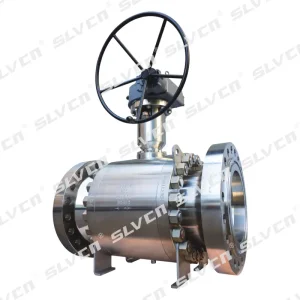
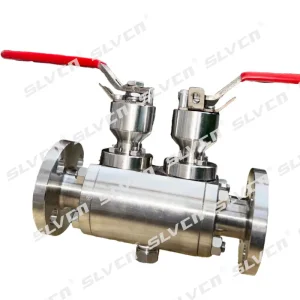
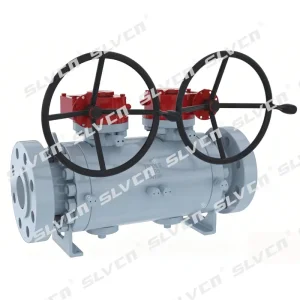
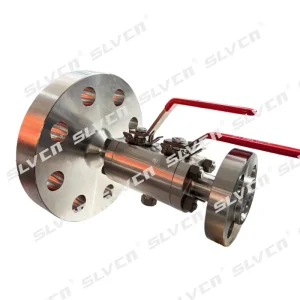
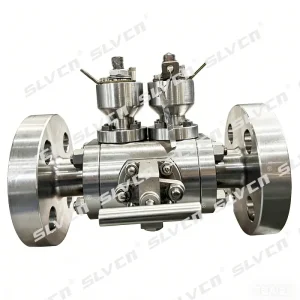
Double Block and Bleed (DBB) design ensures superior safety and leak prevention.
Enhances stability and durability in high-pressure and low-temperature environments.
Guarantees reliable sealing and performance at temperatures as low as -196°C.
Available in A350 LF2, Inconel 625, Hastelloy C, and other materials to meet diverse industrial needs.
Each valve undergoes comprehensive in-house cryogenic testing to ensure consistent, reliable performance.
What is the purpose of a Reduced Port Design in a cryogenic ball valve?
A Reduced Port Design decreases the internal bore diameter relative to the pipeline, which minimizes turbulence and pressure drop across the valve. This makes it especially suitable for flow-sensitive applications where consistent flow control is critical.
What does DBB (Double Block and Bleed) technology mean in cryogenic valves?
DBB technology refers to a valve configuration that provides two independent seating surfaces, each capable of sealing against pressure from a single source. A bleed point between them allows operators to verify the integrity of the seal and safely vent trapped pressure, ensuring enhanced safety and leak prevention.
Why is a Trunnion-Mounted Forged Construction important for high-pressure environments?
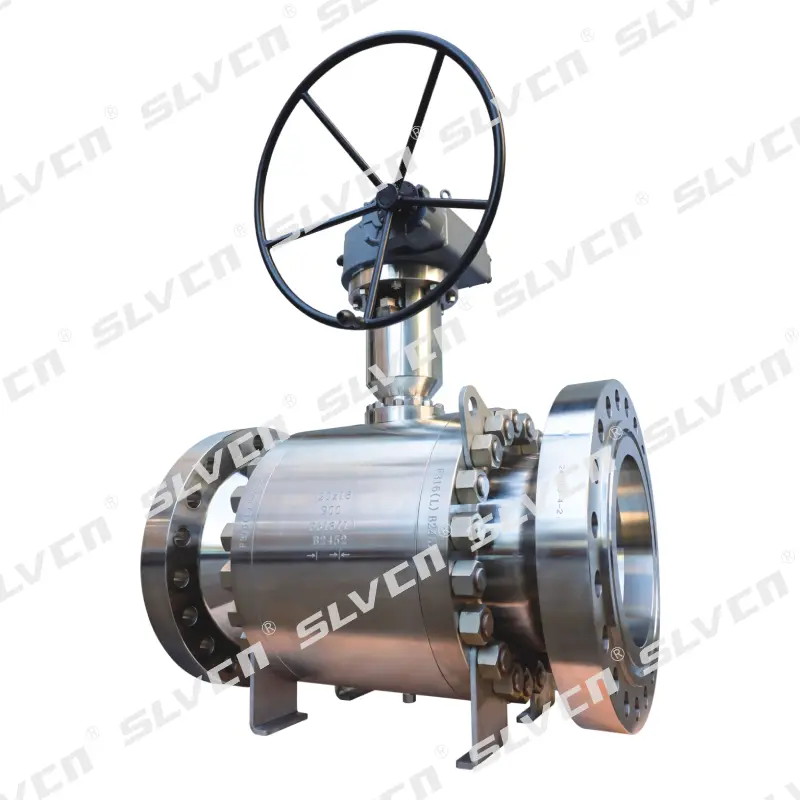
In a trunnion-mounted design, the ball is mechanically anchored at both the top and bottom, reducing the load on the seats and providing greater stability under high-pressure conditions. The forged construction further improves structural integrity, making it ideal for demanding low-temperature and high-pressure industrial applications.
What temperature range can these cryogenic valves handle?
These cryogenic ball valves are engineered to provide reliable sealing and performance at extremely low temperatures, as low as -196°C. This makes them suitable for applications involving liquefied gases such as LNG, liquid nitrogen, liquid oxygen, and liquid argon.
What materials are available for these cryogenic ball valves?
The valves are available in a range of materials including A350 LF2 (a low-temperature carbon steel), Inconel 625, and Hastelloy C, among others. These materials are selected for their excellent performance in cryogenic, corrosive, and high-pressure environments to meet diverse industrial requirements.
How is the quality and reliability of each valve verified before delivery?
Every valve undergoes comprehensive in-house cryogenic testing as part of a rigorous quality assurance process. This includes pressure testing, seat leakage tests, and performance verification at extreme low temperatures to ensure each unit meets consistent and reliable performance standards before shipment.