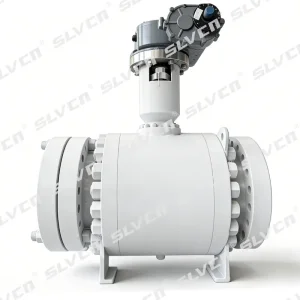
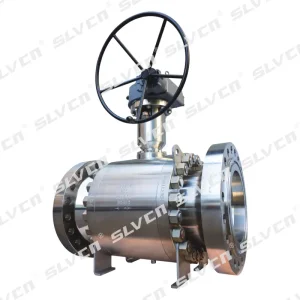
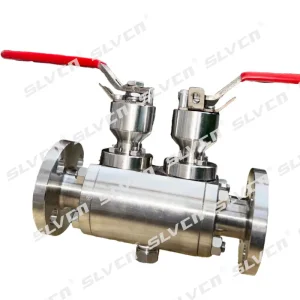
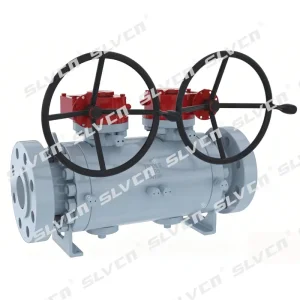
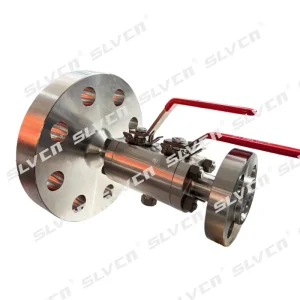
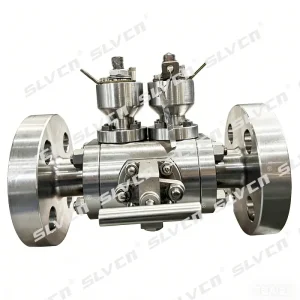
China Integrated Twin Ball DBB Valve Factory - Reliable Suppliers for Dual Stems & High-Risk Media Solutions

,

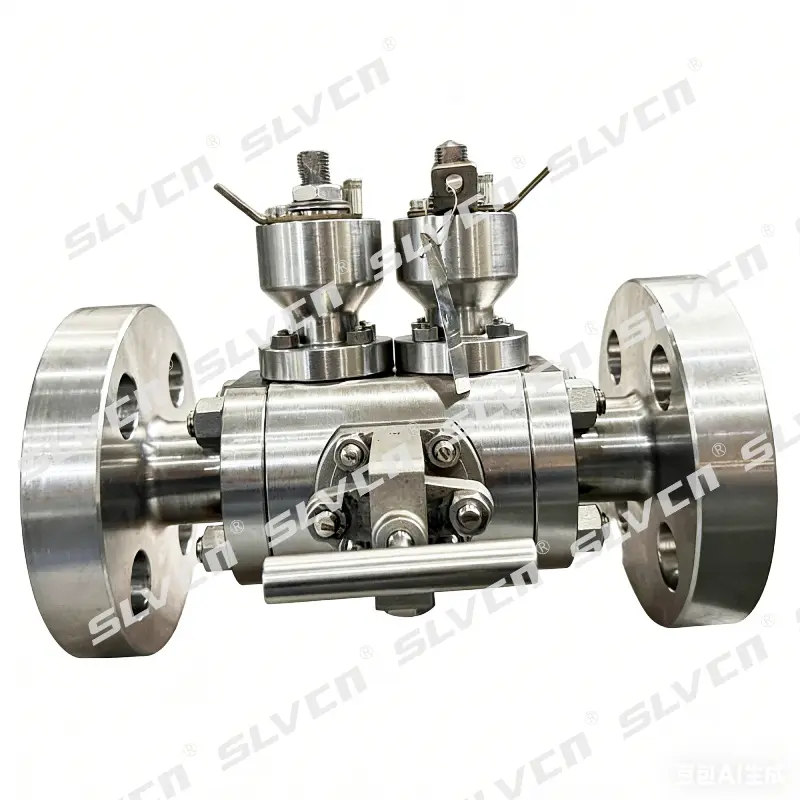
● True Valve-Based Double Block Isolation - Our innovative twin ball design offers superior independent upstream and downstream isolation, making it ideal for critical and hazardous services.

,

● Integrated Compact DBB Construction - This advanced design replaces traditional multi-valve assemblies, minimizing leak paths and space requirements, while significantly lowering installation costs, setting a new standard in the market.

,

● Engineered for High-Risk Media Control - Specifically crafted to enhance safety in flammable, toxic, and high-pressure fluid systems, our valves are reliable choices for demanding applications.

,

● Dual Stems with ISO 5211 Mounting - Featuring independent valve stems equipped with ISO 5211 pads, our products support both manual operation and effortless automation, catering to diverse operational needs.

,

● Reliable Sealing for Long-Term Service - The optimized ball and seat geometry guarantees stable sealing performance, ensuring longevity and durability, a priority for any China suppliers and factory looking for quality assurance.

,

Product Description

Key Features

Twin Ball DBB Structure

True double-block isolation with central cavity for safe pressure verification.

Independent Valve Stems

Flexible manual or automated operation with clear isolation logic.

Three-Piece Compact Body

Easy maintenance, minimized leak paths, and optimized installation layout.

Premium Industrial Materials

Wide material options with durable sealing for long-term high-risk service.

Frequently Asked Questions

Q1
What is a Twin Ball DBB (Double Block and Bleed) valve and how does it work?
A Twin Ball DBB valve features two independently seating ball valves within a single body, creating a central cavity between them. This design provides true double-block isolation — both balls seal off the line simultaneously — while the central cavity can be vented or bled to verify seal integrity and safely release trapped pressure before performing maintenance.
Q2
What are the advantages of independent valve stems in a DBB valve?
Independent valve stems allow each ball to be operated separately, giving operators full control over isolation logic. This enables flexible configurations — manual or automated actuation for each seat — and simplifies troubleshooting. If one stem requires servicing, operations can continue with the remaining valve, reducing unplanned downtime.
Q3
Why is a three-piece compact body design beneficial for industrial valve applications?
A three-piece body allows the valve to be disassembled in-line without removing the entire assembly from the pipeline, significantly reducing maintenance time and costs. It minimizes the number of potential leak paths compared to multi-joint designs and allows for a more optimized installation footprint, especially in space-constrained environments.
Q4
What materials are typically used in premium DBB valves for high-risk service?
Premium DBB valves for demanding applications are typically constructed from materials such as AISI 316L stainless steel, duplex or super-duplex stainless steel, carbon steel (A105), and exotic alloys like Inconel or Hastelloy for highly corrosive environments. Sealing elements often use PTFE, RPTFE, or metal-to-metal configurations to ensure long-term performance under extreme pressure, temperature, and chemical exposure.
Q5
In which industries are Twin Ball DBB valves most commonly used?
Twin Ball DBB valves are widely used in oil and gas (upstream, midstream, and downstream), petrochemical processing, power generation, subsea applications, and chemical plants. They are particularly valued wherever safe pressure isolation and cavity bleed verification are required by process safety regulations, such as those outlined in API 6D, ISO 14313, and related international standards.
Q6
How does a DBB valve improve safety compared to using two separate single valves?
A DBB valve integrates two isolation points and a bleed port into a single compact unit, eliminating multiple pipe connections and reducing overall leak points. Compared to installing two individual valves in series, a DBB valve offers a smaller installation footprint, lower potential for misalignment or improper installation, built-in cavity pressure verification capability, and a unified design that simplifies inspection and compliance documentation for safety-critical systems.

Related Products