Home >
Forged Steel Ball Valve >
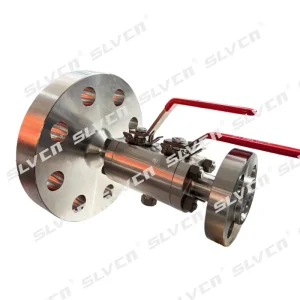
China Factory Suppliers for Reducing Flanged Twin Ball Double Block and Bleed Valve - Enhanced Safety & Space Efficiency
1 / 1
China Factory Suppliers for Reducing Flanged Twin Ball Double Block and Bleed Valve - Enhanced Safety & Space Efficiency
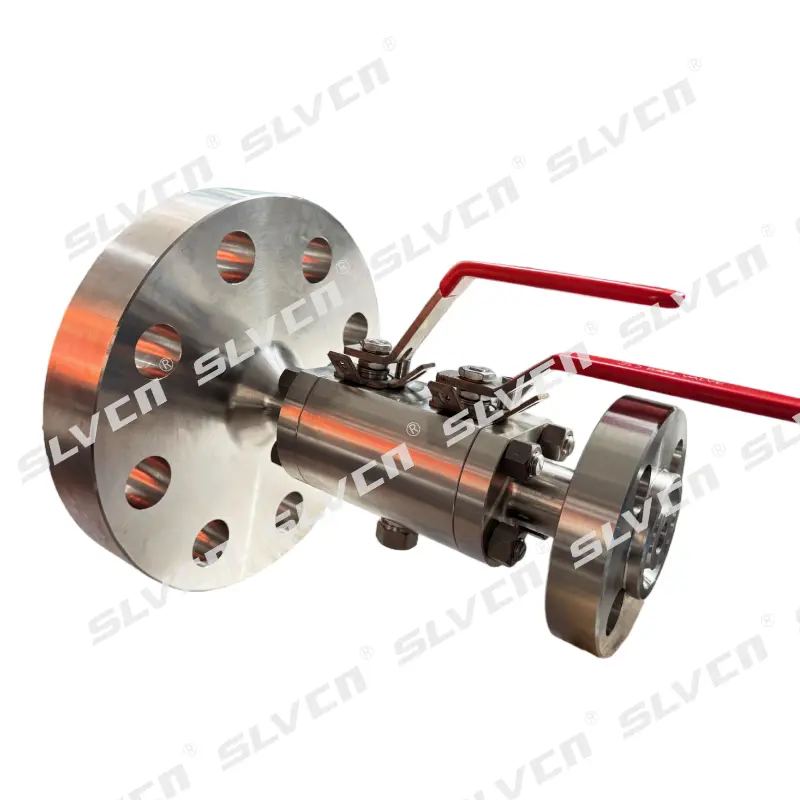
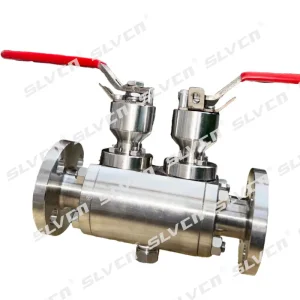
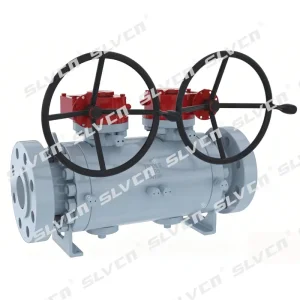
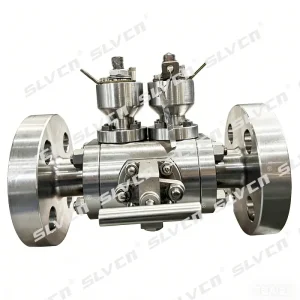
Introducing our advanced engineered valve solution, specifically designed for demanding applications. This innovative valve seamlessly integrates pipeline diameter transitions and features a true Double Block & Bleed isolation, offering unparalleled safety and reliability, Our valve utilizes twin trunnion-mounted balls to ensure independent upstream and downstream isolation, complete with a central bleed cavity for safe and accurate pressure verification. The reducing flanged ends minimize the need for separate reducers, streamlining your piping layout while significantly reducing potential leak paths, Engineered to meet critical service safety requirements, our valve boasts a fire-safe, anti-static, and anti-blowout stem design. Additionally, its compact construction is optimized for skid-mounted systems and installations with space limitations, As a trusted China supplier and factory, we are committed to delivering high-quality valve solutions that meet the specific needs of our clients while ensuring efficiency and safety in their operations. Choose us for your engineered valve needs and experience unmatched performance and quality
Unequal flange sizes on inlet and outlet allow smooth diameter transition without additional reducers in the piping system.
Twin Ball DBB Configuration
Two independent trunnion-mounted balls create double isolation, with a bleed cavity for pressure release and sealing verification.
Compact One-Body Construction
Integrated body design minimizes face-to-face length, making it ideal for space-limited piping and skid-mounted systems.
Central Bleed Port Functionality
Enables safe depressurization, leakage monitoring, and maintenance verification during operation without line removal.
Heavy-Duty Flanged Connection
RF or RTJ flanges ensure secure sealing performance under high-pressure and critical service environments.
Independent Dual Handles
Clear visual indication of valve status and safer manual operation for upstream and downstream isolation control.
Frequently Asked Questions
What is the purpose of the integrated reducing-end design in this valve?
The integrated reducing-end design features unequal flange sizes on the inlet and outlet, allowing a smooth pipe diameter transition within a single valve body. This eliminates the need for additional reducers, saving space and minimizing potential leak points.
How does the Twin Ball DBB configuration provide double isolation?
The Twin Ball DBB (Double Block and Bleed) configuration uses two independent trunnion-mounted balls that each provide a positive seal. The cavity between them acts as a bleed zone to vent trapped pressure and verify sealing integrity.
What are the advantages of the compact one-body construction?
The monobloc construction integrates all components into a single housing, significantly reducing the overall face-to-face length. This is critical for skid-mounted systems and offshore platforms where space is limited.
When should the central bleed port be used during valve operation?
It should be used during maintenance or before working on downstream equipment. It allows operators to safely depressurize the cavity, monitor for seat leakage, and confirm both seals are functioning correctly.
What is the difference between RF and RTJ flanged connections?
RF (Raised Face) flanges use a flat gasket and are standard for general industrial use. RTJ (Ring Type Joint) flanges use a metal ring in a machined groove, offering superior sealing under extreme pressure and high temperatures.
How do the independent dual handles improve operational safety?
They allow separate control of upstream and downstream isolation. Each handle provides a clear visual open/closed status, reducing human error and enabling safe sequential isolation and LOTO compliance.
 Shoulong Valve