Engineered to eliminate fugitive emissions and withstand harsh tropical soil conditions across Western Uganda's pipeline corridors.
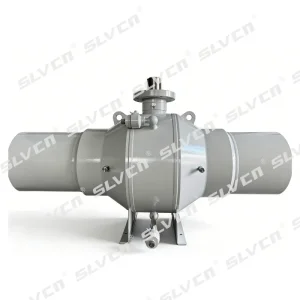
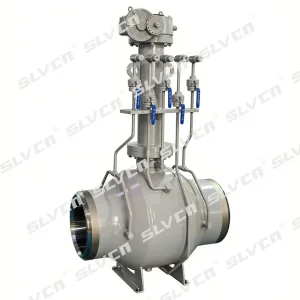
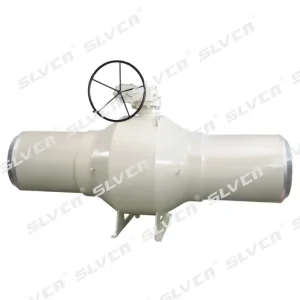
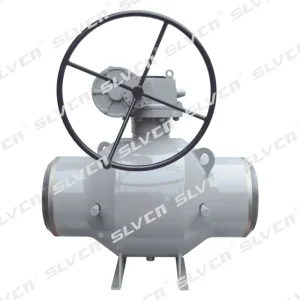
As the primary commercial and industrial hub of Western Uganda, Mbarara is currently experiencing an unparalleled surge in infrastructure investment. Positioned at the critical crossroads of the East African Crude Oil Pipeline (EACOP) secondary corridors, regional municipal water modernization schemes, and expanding agro-processing industrial parks (such as the Mbarara Industrial and Business Park at Kyamugorani), the requirement for ultra-reliable, maintenance-free flow control hardware has reached a critical threshold.
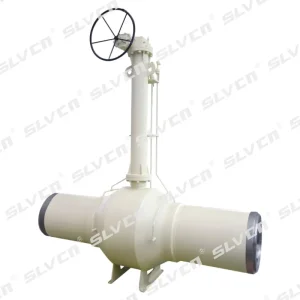
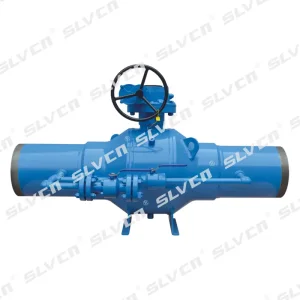
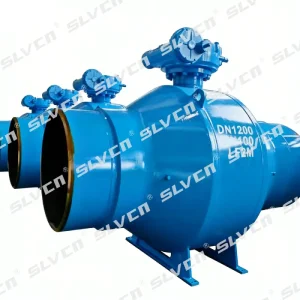
Standard three-piece or two-piece bolted body valves, while suitable for accessible plant environments, present significant operational liabilities when deployed in direct-buried pipeline installations or continuous cross-country trunklines. Body-to-bonnet bolted joints are inherently susceptible to micro-axial flexing, thermal expansion fatigue, and external soil corrosion, leading to potential fugitive emissions and catastrophic seal failures over extended service lifespans. A Fully Welded Ball Valve resolves these vulnerability vectors by permanently joining the forged body housing components through automated Submerged Arc Welding (SAW) or Narrow Gap TIG welding process, effectively transforming the valve shell into an unbroken, pressure-retaining forged steel vessel.
Engineering Gain: Fully welded body architecture eliminates external leakage paths through body flanges, providing maximum structural integrity against line bending moments, soil settlement loads, and thermal stress cycles common to the Western Ugandan terrain.
The municipal and industrial growth of Mbarara City demands localized fluid handling engineering tailored specifically to regional environmental stressors and operational frameworks:
Feeder lines, pressure regulation skids, and intermediate scraper trap stations surrounding Mbarara require API 6D Class 600 and Class 900 DBB (Double Block and Bleed) fully welded trunnion mounted valves designed for sour crude and hydrocarbon gas transit.
High-volume bulk water intake, transmission mains, and booster stations under National Water and Sewerage Corporation (NWSC) oversight require corrosion-resistant coated buried valves with stem extensions for subterranean isolation.
Mbarara's dairy processing plants, beverage bottling units, and agricultural processing facilities rely on metal-seated high-temperature fully welded valves to manage process steam and utility lines reliably without thermal seizure.
For procurement managers and pipeline engineering consultants in Mbarara, selecting between bolted and fully welded ball valves boils down to Total Cost of Ownership (TCO) and long-term risk mitigation. The technical matrix below contrasts key performance parameters:
| Performance Parameter | Fully Welded Trunnion Ball Valve | Conventional Bolted Body Valve | Engineering Benefit for Mbarara Projects |
|---|---|---|---|
| Leakage Potential | Zero external leak paths; fully enclosed forged shell | Body gasket seals vulnerable to thermal cycle & creep | 100% compliance with strict environmental regulations |
| Bending & Shear Resistance | Uniform wall strength absorbs high soil/pipeline stress | Bolting flanges act as stress concentration points | Prevents distortion during tropical heavy rains & soil shift |
| Weight & Envelope Size | Compact cylindrical profile; up to 25% lighter | Bulky flanges require larger excavation pits | Reduces civil excavation and installation footprint |
| Maintenance Requirements | 30+ year design life; maintenance-free buried service | Requires periodic bolt retightening and seal replacement | Eliminates ongoing maintenance OPEX in remote locations |
| Cathodic Protection | Seamless external polyurethane / epoxy coating application | Irregular flange shapes make coating integrity difficult | Superior long-term resistance against soil galvanic corrosion |
Our fully welded ball valve series incorporates state-of-the-art dual-sealing technology engineered for zero-tolerance application environments:
Configured with spring-energized floating seats, our trunnion-mounted designs provide reliable bidirectional sealing. Under DBB configuration (Single Piston Effect - SPE), upstream pressure forces the seat against the ball. If cavity pressure exceeds line pressure, seats automatically relief pressure back into the pipeline. For high-consequence isolation in urban Mbarara segments, DPE seat configurations push both upstream and downstream seats firmly against the ball if cavity pressure rises, providing double isolation security.
Each stem and seat ring assembly is fitted with heavy-duty button-head sealant injection fittings incorporating internal check valves. In the event of primary soft seal damage caused by pipeline debris or abrasive scale, high-viscosity synthetic sealant can be injected to instantly restore temporary bubble-tight bubble isolation without taking the pipeline offline.
Engineered according to API 607 and ISO 10497 standards, our stem sealing arrangement utilizes primary O-rings, secondary graphite packing rings, and anti-blowout stem retainers. In a fire event, the flexible graphite packing withstands temperatures exceeding 650°C, ensuring zero stem blowout or fugitive media release.
Navigating large-scale municipal or energy projects in Mbarara demands not only uncompromised engineering precision but also rapid procurement agility and cost competitiveness. As a direct China-based manufacturer specializing in high-pressure pipeline valves, SLVCN delivers distinct supply chain advantages:
As Uganda transitions into a regional energy powerhouse and modernizes its urban infrastructure, valve technologies must evolve. Our engineering roadmap for products deployed in Mbarara includes:
Future iterations of our buried fully welded valves incorporate wireless piezoresistive pressure sensors and acoustic fiber-optic leak detection probes embedded directly within the valve stem extension. This enables real-time SCADA telemetry for remote monitoring across isolated pipeline segments in Western Uganda.
With global shifts toward clean energy, our R&D teams are testing high-density elastomeric and metal-to-metal seating materials capable of zero-permeation isolation for hydrogen-enriched natural gas streams and solar-powered agricultural pumping networks.
With over 30 years of expertise in forging high-performance ball valves, SLVCN provides reliable, project-ready solutions for critical industrial applications worldwide. Our valves are rigorously engineered, tested, and certified to meet the strictest international standards, ensuring zero-leakage and dependable performance in harsh operating environments.
Every valve undergoes stringent verification procedures to guarantee structural integrity and long-term operational peace of mind.
Specifically built for high-risk, high-pressure, high-temperature, and underground buried environments where maintenance failure is not an option.
Over 30 years supporting international EPC contractors, with full compliance for extended stems, special coatings, and pneumatic/electric actuation.
Hydrostatic shell testing, high-pressure air seat testing, and low-pressure gas testing performed on 100% of manufactured units before dispatch.
Certified to API 6D, ISO 9001, CE/PED, SIL 3, and fire-safe API 607 standards with full heat-batch chemical and mechanical material traceability.
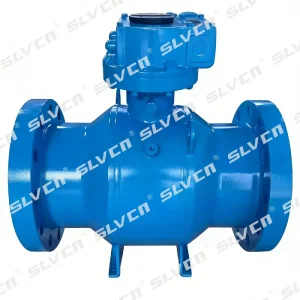
Explore our complete range of fully welded, trunnion mounted, and double block and bleed valves for pipelines and industrial processing.
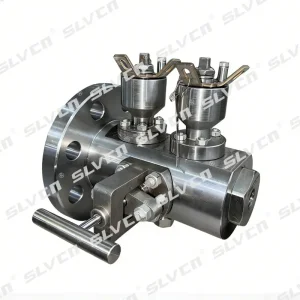
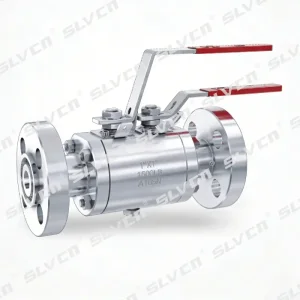
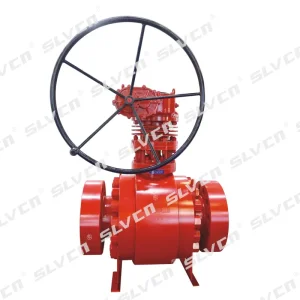
Detailed technical answers to common questions regarding valve selection, installation, standards, and logistics for Western Uganda projects.
Underground pipelines are subject to soil shear forces, ground moisture, thermal expansion, and bending moments caused by heavy rains and soil settlement. Fully welded ball valves feature a seamlessly welded body forged without external flange connections, eliminating potential leak paths to the environment and providing maximum structural resistance against external pipe loads.
Our stem extensions are manufactured from high-grade carbon steel or stainless steel, engineered to match the precise burial depth (typically 1.0 to 3.0 meters below grade). The extension housing features fully sealed protective tubes with grease lines, sealant injection channels, and cavity vent/drain extensions routed directly to an above-ground operator control box.
To protect valves against acidic or moisture-heavy tropical soils, we apply multi-layer liquid epoxy coatings, Polyurethane (PU) heavy-duty coatings, or 3-Layer Polyethylene (3LPE) compliant with ISO 21809 standards. These coatings provide high dielectric strength for cathodic protection compatibility.
We manufacture fully welded ball valves in nominal sizes from DN50 to DN1400 (2" to 56") across pressure ratings from ASME Class 150 to Class 2500 (PN16 to PN420). End connections include Butt-Weld (BW) to ASME B16.25, Flanged (RF/RTJ) to ASME B16.5, or customized pup piece extensions.
Every shipment is accompanied by a EN 10204 3.1 Material Test Report (MTR) detailing chemical analysis, mechanical property testing, impact test values at low temperatures, NDT weld reports (RT/UT/MT), and Hydrostatic Test Certificates certified according to API 6D and API 598.
Seeking reliable flow control solutions tailored for pipeline projects, municipal water extensions, or industrial applications serving Mbarara and Western Uganda? Contact our engineering team today for technical datasheets and instant project quotes.
Send Inquiry Now Shoulong Valve