 Shoulong Valve
The Global Landscape: Ball Valves in Oil & Gas Infrastructure
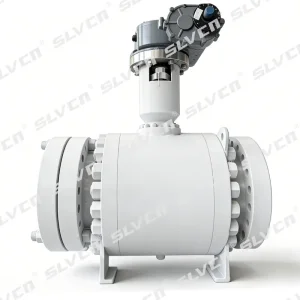
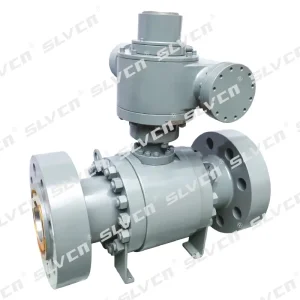
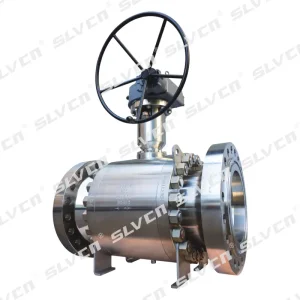
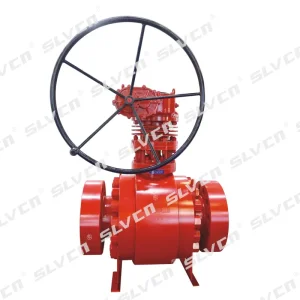
The global oil and gas sector is currently undergoing a structural transformation. As supply chains diversify and the emphasis on "Energy Security" intensifies, the role of reliable flow control infrastructure has never been more critical. Ball valves, particularly trunnion-mounted and Double Block and Bleed (DBB) designs, serve as the lifeline of transmission pipelines, refineries, and LNG storage facilities.
China has emerged as the premier manufacturing hub for these critical components. By integrating advanced CNC machining, rigorous API 6D quality protocols, and innovative material science, Chinese manufacturers are now the backbone of global energy projects, bridging the gap between cost-efficiency and high-integrity performance.
Strategic Industry Trends
1. The Shift to Digital & Smart Actuation
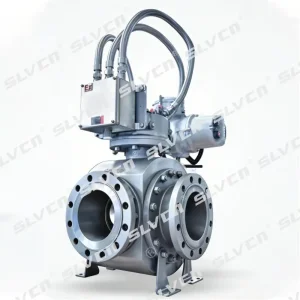
The modern ball valve is no longer just a mechanical barrier. We are witnessing the integration of smart actuators and IOT-enabled sensors that provide real-time telemetry on valve health, leakage status, and operational cycles. This allows for predictive maintenance, significantly reducing costly unplanned downtime in remote gas fields.
2. Advanced Material Resilience
With exploration moving into H2S-rich (sour) environments and deep-sea arctic locations, the demand for exotic alloys like Inconel 625, Hastelloy, and specialized cryogenic steels has surged. The industry is moving toward "Fit-for-Purpose" metallurgy.
Localized Application Scenarios
Our ball valves are engineered for diverse environments:
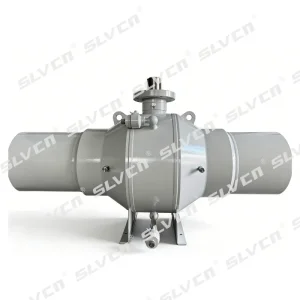
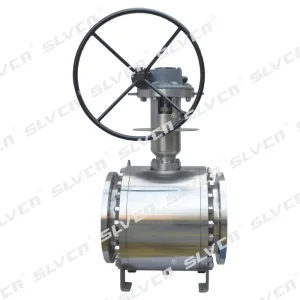
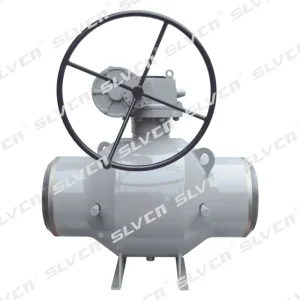
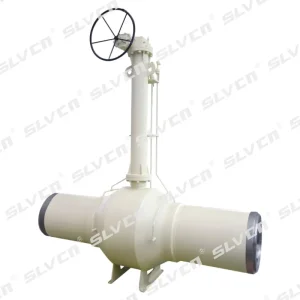
- Midstream Pipelines: Fully welded trunnion ball valves designed for underground, buried, and long-distance gas transmission, focusing on anti-corrosion and long-term durability.
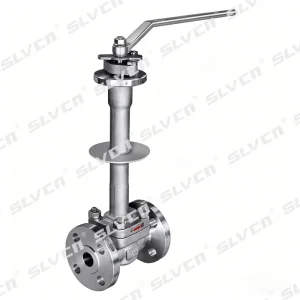
- LNG & Cryogenic Processing: Specialized extended stem valves that maintain seal integrity at temperatures as low as -196℃, crucial for liquified gas safety.
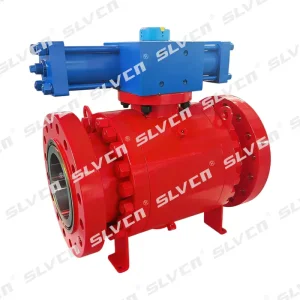
- High-Pressure Refineries: Metal-to-metal seated valves designed to withstand abrasive slurries and high-temperature cracking processes.
Technology Roadmap & Future Outlook
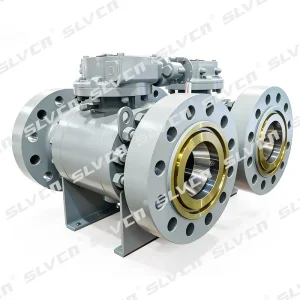
The future of valve technology lies in "Zero Leakage" mandates. We are investing in R&D to refine the Double Block and Bleed (DBB) design. By incorporating multi-layer sealing structures and anti-blowout stem designs, we are aiming to achieve fugitive emission levels well below current international standards, supporting global decarbonization and methane emission reduction targets.