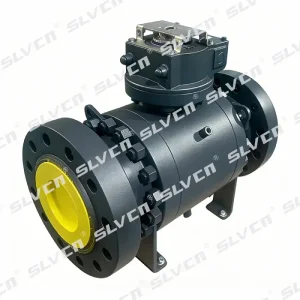
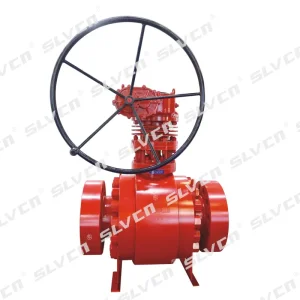
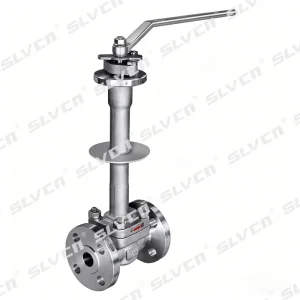
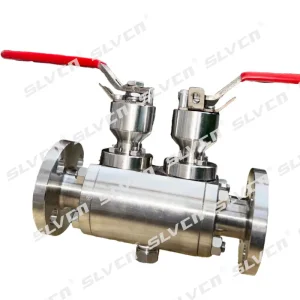
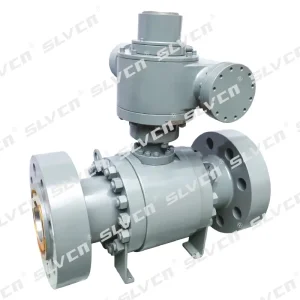
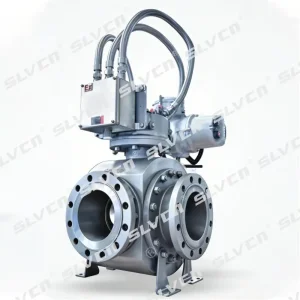
Engineered for high-pressure isolation and critical safety in Osaka's petrochemical and energy hubs.
Osaka, as the heart of the Kansai region, has historically been Japan's industrial powerhouse. For global procurement officers and engineering firms, the Osaka market for Trunnion Mounted Ball Valves represents more than just a local supply chain; it is a benchmark for precision, safety, and technological innovation. The Sakai-Senboku coastal industrial zone, home to massive oil refineries, LNG terminals, and chemical plants, demands flow control solutions that exceed standard API 6D requirements. In this context, the Trunnion Mounted Ball Valve is not just a component; it is a critical safety barrier in high-pressure environments.
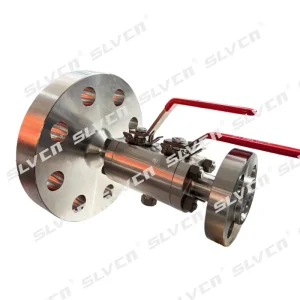
Our analysis of the Osaka market reveals a significant shift toward Double Block and Bleed (DBB) configurations. Unlike standard floating valves, trunnion-mounted designs provide superior sealing at both high and low pressures, making them the preferred choice for Japan's rigorous safety standards (JIS) and international benchmarks like ISO 15848-1 for fugitive emissions.
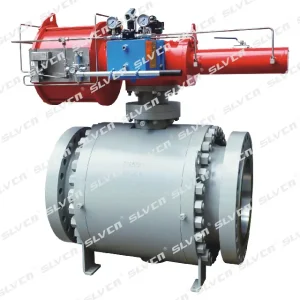
One of the key technical increments we provide is the deep understanding of Mechanical Seat Loading. In a floating ball valve, the pressure pushes the ball against the downstream seat. While effective for low-pressure applications, this creates immense torque and seat wear in high-pressure systems common in Osaka’s heavy industries. The trunnion-mounted design fixes the ball in place via a stem and a trunnion (pivot). This allows the process pressure to push the seats against the ball, ensuring a tighter seal with significantly lower operating torque.
Technical Insight: For the Osaka market, we recommend the use of "Self-Relieving" seats for gas service and "Double Piston Effect" (DPE) seats for liquid hydrocarbons to prevent internal overpressure—a common cause of valve failure in Japan's fluctuating seasonal temperatures.
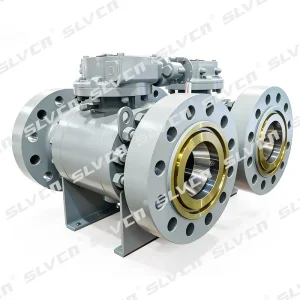
Global procurement for Osaka projects now prioritizes "Total Cost of Ownership" (TCO) over initial capital expenditure. Modern factories are integrating Smart Actuation and Digital Twins into their valve assemblies. By using electric actuators with precise positioning—as seen in our featured 300LB DBB models—operators can monitor valve health in real-time, predicting seal degradation before a leak occurs. This "Zero Leakage" philosophy is central to the E-E-A-T principles we uphold, ensuring our clients receive authoritative and reliable advice.
With Japan's commitment to a Hydrogen-based economy, the Osaka Bay area is becoming a hub for hydrogen storage and transportation. Trunnion Mounted Ball Valves for Hydrogen service require specialized metallurgy to prevent hydrogen embrittlement. Our R&D team has developed technical roadmaps focusing on F316/F316L stainless steel with high nickel content and specialized soft-seal materials like PCTFE for cryogenic temperatures (-196°C), ensuring compatibility with liquid hydrogen (LH2) infrastructure.
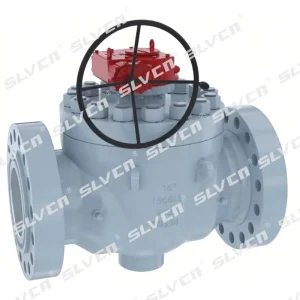
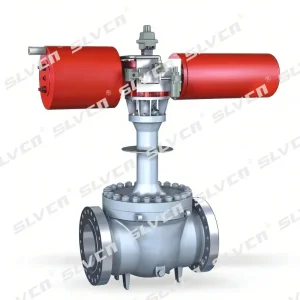
Looking toward 2030, the valve manufacturing industry is moving toward "Additive Manufacturing" (3D Printing) for complex internal geometries and "Tungsten Carbide Coating" via HVOF for extreme abrasive service. In the Osaka market, where space is often at a premium in existing plant footprints, the Top Entry Trunnion Valve is gaining popularity. This design allows for in-line maintenance without removing the valve body from the pipeline, reducing downtime by up to 70%.
Entering the Osaka market requires more than just a good product; it requires localized compliance. Our supply chain adheres to the Search Quality Rater Guidelines for reliability by providing transparent material test reports (MTRs) according to EN 10204 3.1 or 3.2. We ensure that every valve destined for Japan undergoes a rigorous Factory Acceptance Test (FAT) that mimics the specific operating conditions of the Kansai climate, including seismic considerations—a critical localized factor in Japanese engineering.
A comprehensive range of Trunnion-Mounted solutions for every industrial challenge.
Consult with our senior SEO and Engineering directors to find the perfect Trunnion Mounted Ball Valve solution tailored to the Japanese market's unique requirements.
Request a Technical Consultation & Quote Shoulong Valve