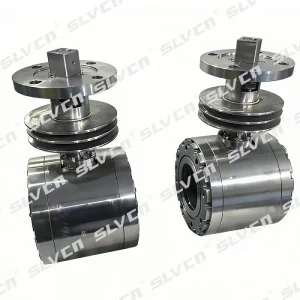
In the modern industrial era, high-pressure steam serves as the thermodynamic "lifeblood" for power generation, petrochemical refining, and heavy manufacturing. As global energy systems transition toward higher efficiency and lower emissions, the demand for High-Quality High Pressure Steam Valves has reached an unprecedented peak. Factories worldwide are no longer just metal fabricators; they have evolved into high-tech engineering hubs that integrate advanced metallurgy with digital fluid dynamics.
Transitioning from traditional carbon steel to advanced alloys (F11, F22, F91) to withstand super-critical steam temperatures exceeding 550°C.
Leading factories in China and Europe are adopting "Smart Manufacturing" to ensure zero-defect production cycles for critical isolation components.
Standard data sheets often overlook the "Information Gain" required for long-term operational safety. Beyond pressure ratings (Class 900, 1500, 2500), a high-quality factory must provide data on Cavitation Resistance, Thermal Cycling Durability, and Fugitive Emission Compliance. Our approach at SLVCN focuses on these "invisible" parameters that determine whether a valve lasts 2 years or 20 years in a severe steam environment.
The roadmap for high-pressure steam valves is defined by three pillars: Material Science, Intelligent Actuation, and Sealing Integrity.
Moving away from soft-seated designs to tungsten carbide and satellite-coated metal seats. This ensures zero-leakage (Class VI) even when steam carries particulates at high velocities.
Integrating IoT sensors within the valve body to monitor real-time pressure drops and temperature fluctuations, allowing for predictive maintenance before a steam leak occurs.
Advanced graphite packing systems and live-loading technologies to eliminate fugitive emissions, meeting the strictest EPA and European environmental standards.
From the desert oil fields of the Middle East to the offshore platforms in the North Sea, High-Pressure Steam Valves must adapt to local environmental stressors. In coastal regions, corrosion-resistant external coatings are mandatory, while in extreme cold climates, material toughness (Charpy V-Notch testing) becomes a non-negotiable safety requirement for steam headers.
Experience, Expertise, Authoritativeness, and Trustworthiness are the cornerstones of SLVCN's manufacturing philosophy.
Years of Engineering Expertise
Global Projects Served
Safety Integrity Certification
Rigorous Quality Control
"True authority in valve manufacturing is earned through thousands of cycles in high-pressure steam environments without a single failure incident."
We implement a 100% pressure testing protocol. Every valve exported from our factory undergoes hydrostatic and pneumatic testing that exceeds API 598 and ISO 5208 standards. Our engineers specialize in User Intent Mining—understanding that a "High Pressure Steam Valve" buyer isn't just looking for a part; they are looking for "System Uptime" and "Personnel Safety."
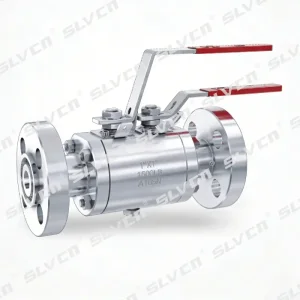
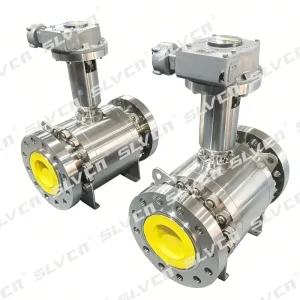
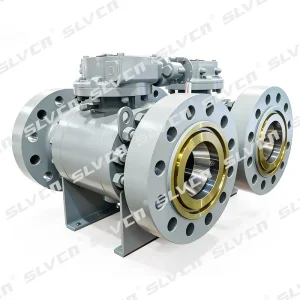
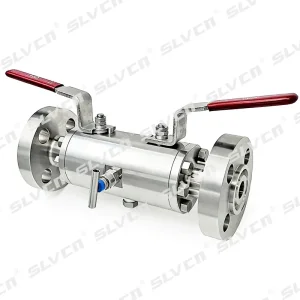
One of the most critical evolutions in steam safety is the Double Block and Bleed (DBB) configuration. Traditionally, steam isolation required two separate valves and a spool piece. Modern high-quality factories now produce integrated DBB valves that offer:
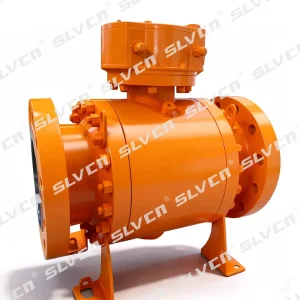
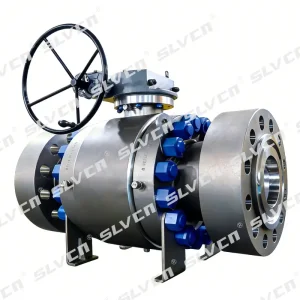
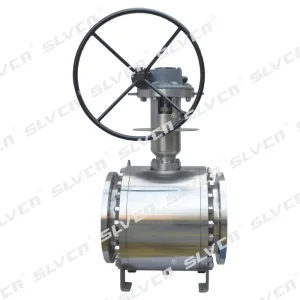
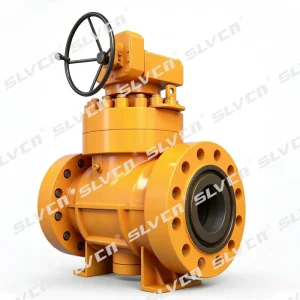
For high-pressure pipeline safety, the ASTM A105N forged body provides superior grain structure and resistance to thermal shock, making it the preferred choice for 1500LB and 2500LB steam service.
A: Steam is highly erosive. Soft seats (PTFE/PEEK) degrade rapidly at temperatures above 250°C. Metal-seated valves, specifically those with HVOF (High-Velocity Oxygen Fuel) coatings, provide the hardness required to resist steam "wire-drawing" and erosion.
A: For temperatures up to 425°C, ASTM A105N is excellent. However, for higher temperatures (superheated steam), alloy steels like ASTM A182 F11 or F22 are required to prevent creep and maintain structural integrity.
A: We utilize precision-ground balls and matching seats that are lapped in pairs. Each DBB valve undergoes a high-pressure gas test to ensure zero bubbles, fulfilling the requirements for "Critical Isolation" in steam manifolds.
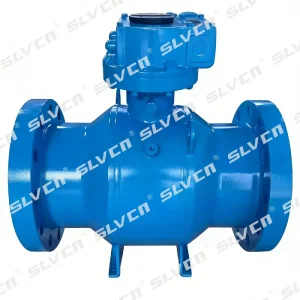
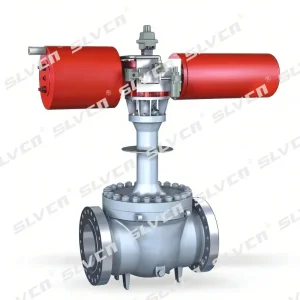
A: Absolutely. Our designs include ISO 5211 mounting pads, making them compatible with pneumatic, electric, or electro-hydraulic actuators for seamless integration into a plant's DCS (Distributed Control System).
 Shoulong Valve