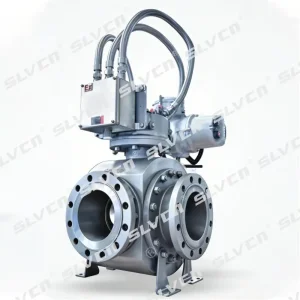
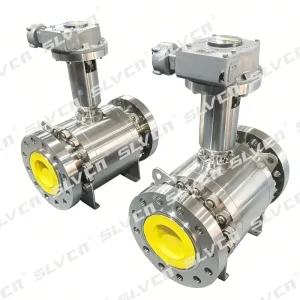
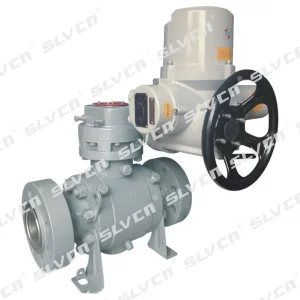
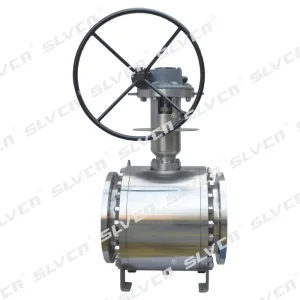
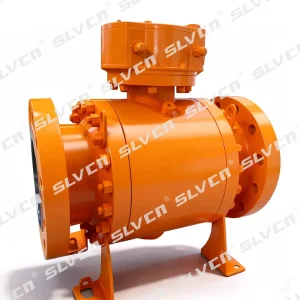
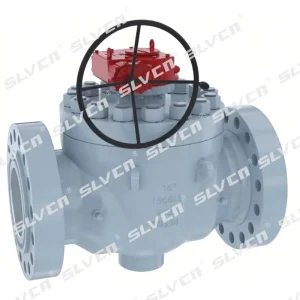
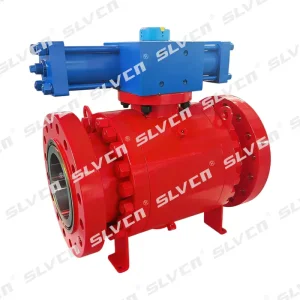
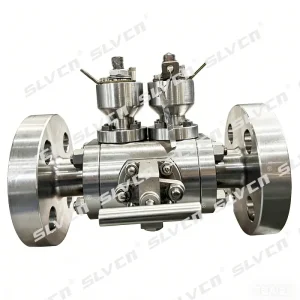
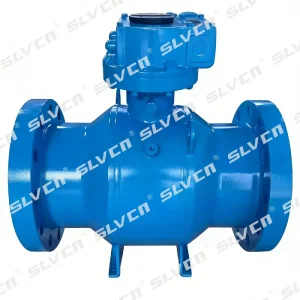
Industry-standard solutions for critical isolation and flow control.
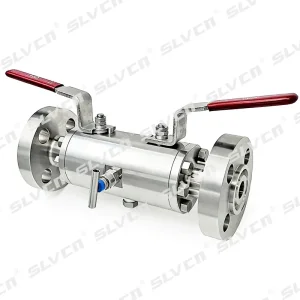
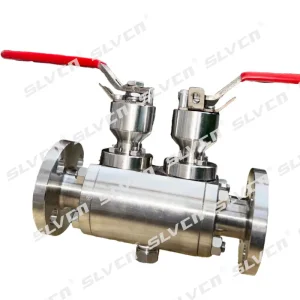
In the complex landscape of industrial fluid management, the Stainless Steel Floating Ball Valve stands as a cornerstone of reliability. As a leading OEM manufacturer with over 30 years of expertise, we understand that "Standard" is no longer enough. Modern infrastructure demands valves that offer not just isolation, but longevity, zero-leakage performance under extreme thermal cycling, and full compliance with evolving environmental mandates.
Our commitment to E-E-A-T (Experience, Expertise, Authoritativeness, and Trustworthiness) is reflected in every forged component. By utilizing advanced metallurgy including CF8M, CF3M, and Duplex Stainless Steels, we provide solutions that resist the most aggressive corrosive media found in chemical processing, oil & gas, and marine environments.
How the Stainless Steel Floating Ball Valve market is transforming for 2025 and beyond.
The global shift toward green energy requires valves that can handle the unique challenges of hydrogen—namely its low molecular weight and tendency for embrittlement. We are pioneering high-integrity sealing designs that meet ISO 15848-1 fugitive emission standards.
The integration of IoT sensors into ball valve assemblies allows for real-time monitoring of torque, temperature, and leakage. This transition from reactive to predictive maintenance is significantly lowering the Total Cost of Ownership (TCO) for our global partners.
Beyond standard 316SS, there is a rising demand for Super Duplex and Nickel Alloys (Inconel, Monel) for deep-sea and high-temperature petrochemical applications. Our forging processes are optimized to maintain grain structure integrity in these high-performance alloys.

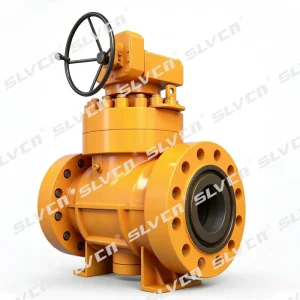
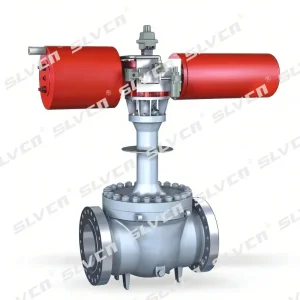
SLVCN provides reliable, project-ready solutions for critical industrial applications. Our valves are rigorously engineered, tested, and certified to meet the strictest international standards (API 6D, API 608, CE/PED, SIL 3), ensuring zero-leakage and dependable performance in harsh operating environments.
As a specialized OEM Stainless Steel Floating Ball Valve manufacturer, we leverage vertically integrated manufacturing. From the initial forging to precision CNC machining and rigorous hydrostatic/pneumatic testing, every step is performed in-house to guarantee quality control that third-party assemblers simply cannot match.
Streamlining the supply chain for complex infrastructure projects.
Our floating ball valves provide essential isolation for pipeline manifolds and separator units. The compact design of the floating ball allows for rapid actuation and ease of maintenance in remote locations.
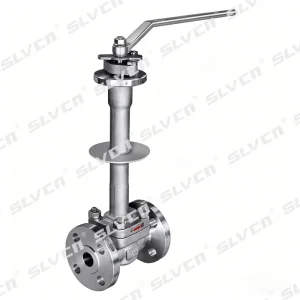
Engineered for temperatures down to -196℃, our stainless steel valves feature extended bonnets and specialized Kel-F or PCTFE seats to ensure cryogenic sealing integrity.
Corrosion resistance is non-negotiable. We provide detailed MTRs (Material Test Reports) and NACE MR0175/MR0103 compliance to ensure our valves survive in sour gas and acidic environments.
Navigating the regulatory requirements of different regions is a critical part of our OEM service. Whether it's CRN registration for Canada, EAC certification for the Eurasian Customs Union, or API 6FA fire-safe certification for global refinery standards, we provide the documentation and localized support necessary to ensure your project's approval.
Our vision for the next generation of industrial valves.
Focusing on eliminating fugitive emissions through multi-layer stem packing and live-loaded gland designs. Achieving TA-Luft and ISO 15848 certification across all floating ball valve lines.
Developing thermoplastic-elastomer hybrid seats that combine the chemical resistance of PTFE with the resilience of high-grade elastomers to handle abrasive slurries without compromising seal integrity.
Integrating micro-actuators and self-diagnostic circuits directly into the valve body, allowing the valve to perform its own partial stroke testing (PST) and report health status via 5G/LoRaWAN networks.
Technical insights and procurement guidance.
Ready-to-ship and custom-engineered valves for immediate deployment.
 Shoulong Valve